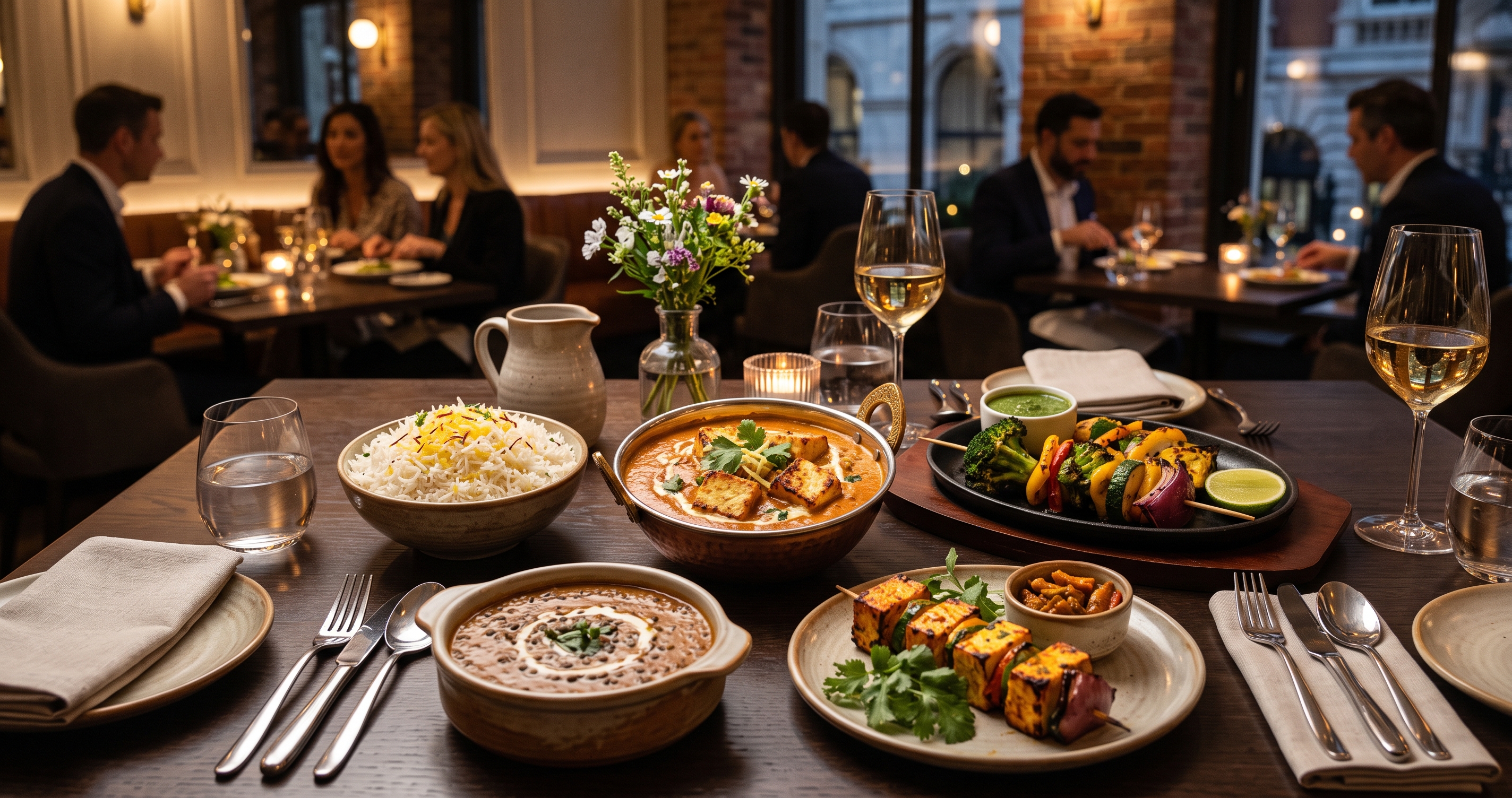
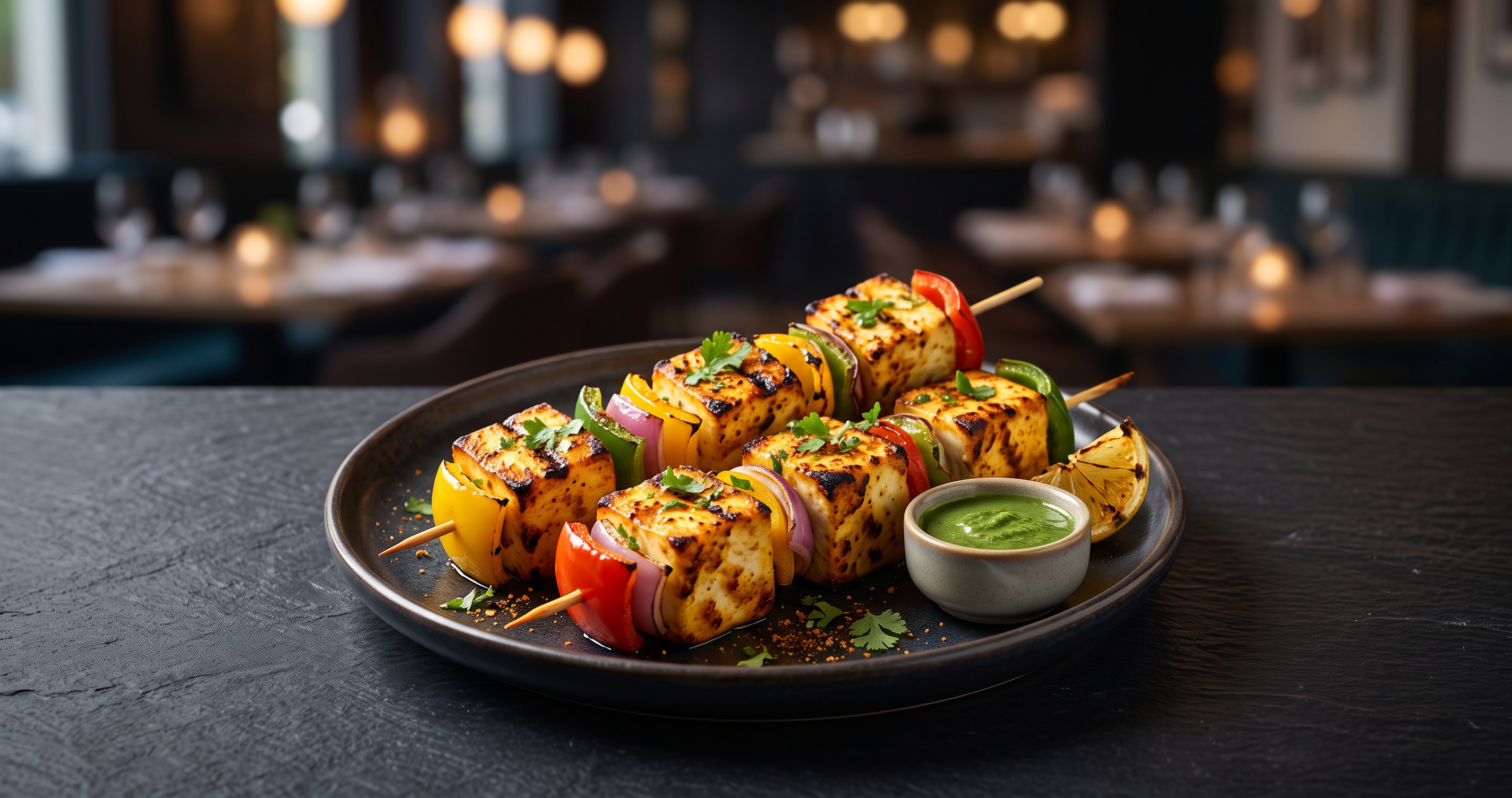
Paneer shashlik and paneer tikka both put grilled cheese on a skewer, but they are built differently. Tikka uses small cubes in a thick, spiced yoghurt marinade and is cooked mostly on its own. Shashlik uses larger, flatter pieces in a lighter, sharper marinade, threaded between onion, pepper and tomato so the vegetables share the plate.
Where Do The Two Dishes Come From?
The names tell you a lot. “Tikka” comes from a word for pieces or bits, and in North Indian kitchens it simply means boneless chunks marinated and cooked in the tandoor. Chicken came first; paneer tikka followed as restaurants built out their vegetarian menus in the second half of the twentieth century.
“Shashlik” travelled further. The Russian shashlyk is generally traced to a Turkic word for skewer (the same root as shish in shish kebab), and it describes meat grilled over coals across the Caucasus and Central Asia. Indian restaurants borrowed the name for a style rather than a recipe: skewered pieces alternated with vegetables. You will also meet chicken shashlik indian style in two forms.
One is dry and charred from the tandoor. The other, common in Indo-Chinese cooking, is skewered chicken and vegetables served in a glossy sauce over rice. Same word, very different dish, so it pays to ask which one a menu means.
How Is The Marinade Different?
This is the biggest technical gap between the two. A good paneer tikka marinade is thick enough to cling. In our kitchen we start with hung yoghurt (strained for a few hours so most of the whey drips away), then add ginger and garlic paste, Kashmiri chilli for colour more than heat, roasted cumin, a little garam masala, dried fenugreek leaves rubbed between the palms, salt, lemon and a spoon of mustard oil. A tablespoon of gram flour, toasted in a dry pan until it smells nutty, binds everything so the coating does not slide off in the heat.
Why bother hanging the yoghurt? Paneer does not need tenderising the way meat does; it is already soft. What it needs is a coating that sets into a crust. Watery yoghurt steams instead of charring and leaves the cheese pale and slick.
A shashlik marinade is looser and brighter. There is usually less yoghurt (sometimes none), more oil, and an acid such as lemon juice or a splash of vinegar. Black pepper, a little chilli, and often a touch of the same spice blend used for the vegetables. The thinner coating lets the edges of the onion and pepper blister without burning the spices, because everything on that skewer has to finish at the same moment.
At Paro our base for both is the house 48-spice mix, but we use it differently: deeper and more of it on tikka, a lighter dusting on shashlik so the charred vegetables can speak.
Does The Cut Of Paneer Really Matter?
More than most people expect.
| Cuts | Paneer tikka | Paneer shashlik |
|---|---|---|
| Typical cut | Cubes, roughly 3 cm each side | Flatter squares, about 3.5 to 4 cm wide and 1.5 cm thick |
| Marinade | Thick hung-yoghurt base, heavily spiced | Thinner, oil and acid led, lighter spice |
| On the skewer | Mostly paneer, sometimes a few onion pieces | Paneer alternating with onion, pepper, tomato |
| Cooking aim | Deep char on the coating, soft centre | Even cooking of cheese and vegetables together |
| Typical serving | On a hot plate with onion rings, lemon and mint chutney | Left on or slid off the skewer, sometimes over rice or with a sauce |
Cubes give tikka more surface area per bite, which means more crust. Shashlik pieces are cut flatter to match the thickness of an onion petal or a square of pepper. If the paneer is much thicker than the vegetables, the vegetables scorch before the cheese warms through. If it is much thinner, the paneer dries and turns rubbery.
Paneer is made by curdling hot milk with acid, so its proteins are already set. That is why it softens rather than melts on the grill. It also means overcooking squeezes moisture out and makes it squeaky. A trick we use for shop-bought blocks: soak the cut pieces in warm salted water for 15 to 20 minutes before marinating. They relax noticeably.
How Should Each One Be Cooked At Home?
You do not need a tandoor, which runs at several hundred degrees. A very hot grill gets you most of the way. Here is a reliable home method for shashlik, serving two:
- Cut 250 g paneer into 8 flat squares. Soak in warm salted water for 15 minutes, then pat dry.
- Cut 1 red onion into quarters and separate the layers. Cut 1 green and 1 red pepper into squares the same size as the paneer. Use 6 cherry tomatoes whole.
- Mix 2 tbsp thick yoghurt, 2 tbsp oil, 1 tbsp lemon juice, 1 tsp ginger-garlic paste, 1 tsp Kashmiri chilli, ½ tsp ground black pepper, ½ tsp roasted cumin, ½ tsp garam masala and ¾ tsp salt.
- Toss the paneer and vegetables in the marinade. Rest 30 minutes at room temperature (longer adds little to paneer).
- Thread onto skewers: onion, pepper, paneer, tomato, repeating. Leave a small gap so heat reaches every side.
- Heat the grill to its highest setting with the rack close to the element. Cook for 4 to 5 minutes, turn, baste with a little melted butter, then 3 to 4 minutes more until the pepper edges blacken in spots.
- Finish with a squeeze of lemon and a pinch of chaat masala. Serve at once.
For tikka, use 3 cm cubes, the thicker hung-yoghurt marinade described above, and the same grill, turning every 3 minutes for about 10 minutes in total. Stop as soon as the coating catches. A dark edge is the goal; a dry centre is the mistake.
How Is Each Dish Usually Presented?
Paneer tikka tends to arrive on a sizzling plate or a board, the pieces pulled off the skewer, scattered with sliced raw onion and served with green chutney. It is a starter built for sharing and dipping.
Shashlik is more of a statement. Some kitchens bring it to the table still on the skewer so you see the alternating colours. Others slide it onto a bed of rice with a tomato-based sauce, which is closer to the Indo-Chinese style. If you see paneer tikka shashlik on a menu, it usually signals a hybrid: tikka-style marinade on the paneer, shashlik-style vegetables threaded alongside. That is often the best of both, provided the kitchen has matched the cuts.
Which Should You Order Before A Show?
Among Restaurants Covent Garden diners use for an early meal, the dishes that work best are the ones that come out fast and eat easily. Paneer tikka is quick from the tandoor and suits sharing while you settle in. Paneer shashlik is a little more substantial and makes a good main for a vegetarian guest when paired with a bread and a dal.
At Paro we sit beside the Lyceum Theatre on Wellington Street, so we plan our pre-theatre service around the curtain, not the other way round. If you are comparing Restaurants Pre Theatre options, tell us your show time when you arrive and we will pace the grill dishes accordingly. Our menu is tagged for halal, vegetarian, vegan, gluten-free, dairy-free and nut-free diners, which helps mixed groups order without a long conversation. That clarity is part of what people look for in halal fine dining london: knowing what is on the plate, and trusting that the kitchen respects it.
Key Takeaways
- Paneer tikka uses thick hung-yoghurt marinades and small cubes for maximum crust.
- Shashlik uses a lighter, sharper marinade and flatter pieces threaded with onion, pepper and tomato.
- Match paneer thickness to the vegetables so everything finishes cooking together.
- Soak shop-bought paneer in warm salted water before marinating to keep it soft.
- “Shashlik” can mean a dry tandoor skewer or an Indo-Chinese dish in sauce, so check which style is on offer.
Frequently Asked Questions
Is shashlik the same as paneer tikka?
No. Both are grilled, marinated paneer, but shashlik is threaded with vegetables and uses a thinner marinade, while tikka relies on a thick spiced yoghurt coating. The cut size and serving style also differ.
Why does my paneer go rubbery on the grill?
It has been overcooked or cut too thin. Paneer is already set by acid, so extra heat pushes out moisture and tightens it. Soak it in warm salted water first and take it off the heat as soon as the coating chars.
Can paneer tikka be made without yoghurt for dairy-free diners?
Paneer itself is dairy, so a truly dairy-free version needs tofu or a similar alternative. For that, a coconut yoghurt or oil-and-lemon marinade with toasted gram flour gives a similar crust.
What is chicken shashlik in Indian restaurants?
It usually means boneless chicken skewered with onion and pepper and cooked in the tandoor. In Indo-Chinese restaurants it can instead mean grilled chicken and vegetables served in a sweet-sour sauce over rice.
How long should paneer marinate?
Thirty minutes to two hours is plenty. Unlike meat, paneer gains flavour on the surface rather than deep inside, so overnight marinating adds little.
Final Thoughts
The difference between the two comes down to purpose. Tikka is about a concentrated, spiced crust on soft cheese. Paneer shashlik is about balance, with cheese and charred vegetables sharing the skewer and finishing together. Get the marinade thickness and the cut right and both are easy to cook well at home. If you would rather taste the contrast side by side, come and see us at Paro in Covent Garden before your show, and ask the team which grill dishes are on that day.