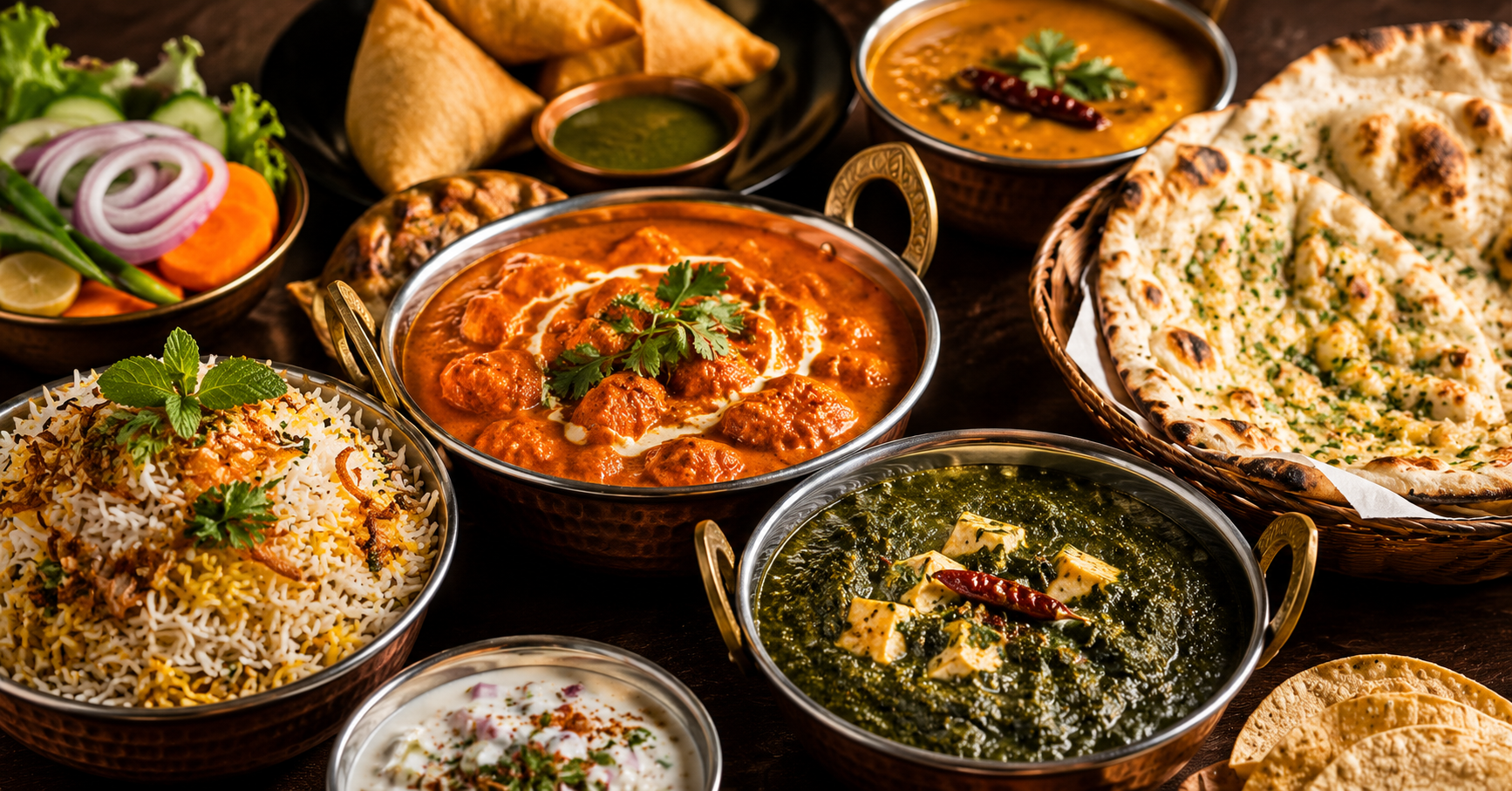
In the best Indian food, aromatics build the base and fresh herbs finish the dish. Onion, ginger, garlic and chilli are cooked slowly to create depth. Curry leaves and whole spices are flashed in hot fat for fragrance. Coriander, mint and dried fenugreek go in at the end, because their aroma fades fast with heat.
Why does timing matter more than quantity?
Most of what you smell in a herb is volatile: small aromatic molecules that evaporate easily. That is the whole point of them, because aroma accounts for a large share of what we experience as flavour. It is also their weakness. Boil coriander leaves for twenty minutes and most of that fresh, green character has gone into the air above the pan.
So Indian cooks treat aromatics in stages. Some are cooked hard to transform them. Some are cooked briefly to release them. Some are barely cooked at all. Adding the right thing at the wrong moment is the most common reason home curries taste flat, even when every ingredient is right.
At the pass, the question we ask about a finished curry is rarely “does it need more spice?” It is usually “does it need lifting?” Nine times out of ten the answer is a handful of fresh herbs and a squeeze of lime.
What happens to onion, ginger and garlic at the start?
These three form the foundation of a great many North and East Indian dishes, and they are cooked to change them, not to preserve them.
Onion. Sliced or chopped onion cooked slowly in oil goes from translucent, to pale gold, to deep brown over 15 to 25 minutes. Along the way its sugars caramelise and the Maillard reaction builds savoury, roasted flavours. The stage you stop at sets the colour and sweetness of the whole curry. Rushing it on high heat burns the edges while leaving the centre raw, which tastes harsh.
Ginger. Fresh ginger gets its bite from gingerol. Cooking converts some of it into zingerone, which is milder and sweeter. That is why raw ginger in a salad is sharp, while ginger cooked into a masala is warm and round.
Garlic. Crushing garlic triggers the formation of allicin, the source of its pungency. In hot oil it mellows quickly and turns nutty at pale gold. Past that, it turns bitter within seconds. Most kitchens add ginger-garlic paste after the onions have browned, then cook it for a minute or two until the raw smell disappears.
Which aromatics are fried quickly for fragrance?
This is the tempering stage, called tadka, chhonk or, in Bengal, phoron. Whole spices and certain leaves go into very hot fat for a few seconds, and their aroma dissolves into the oil.
- Curry leaves (from the Murraya koenigii plant) should crackle and turn glossy in 5 to 10 seconds. Fresh leaves have a citrus, slightly resinous scent that dried ones barely hint at.
- Indian bay leaf (tej patta) comes from a cinnamon relative and smells of clove and cinnamon. It is a different plant from the European bay laurel, and the two are not true substitutes.
- Panch phoron, the Bengali five-spice, is usually equal parts cumin, fennel, nigella, fenugreek and mustard seed, used whole. When it pops in hot mustard oil, the smell fills the room.
Chef Niaz’s cooking at Paro is grounded in Kolkata and West Bengal traditions, so phoron is second nature to our kitchen. Mustard oil heated until it shimmers loses much of its raw pungency, and the seeds bloom in it. Get the oil too cool and the spices sit there soaking. Too hot and they blacken. Listen for the crackle.
Which herbs belong at the very end?
| Herb or aromatic | When to add | Why |
|---|---|---|
| Fresh coriander leaves | Off the heat, just before serving | Its fresh aroma compounds break down quickly with heat |
| Coriander stems | Early, with the onions or in a paste | Stems are tougher and hold more flavour through cooking |
| Mint | At the end, or raw in chutneys and raita | Cooling, menthol notes fade when cooked long |
| Dried fenugreek leaves (kasuri methi) | Last 2 to 3 minutes, crushed between palms | Releases a maple-like, savoury aroma that lingers |
| Green chilli | Slit and added late for fresh heat, or early for mellow warmth | Timing changes both heat and flavour |
| Fresh lime or lemon | At the table or off the heat | Acid brightens herbs and cuts richness |
The coriander point catches people out. The leaves are the garnish, but the stems are where much of the flavour sits. We blitz stems into green pastes and marinades and save the leaves for the finish. Two ingredients from one bunch.
A note for those who find coriander soapy: that is real, not fussiness. Research has linked it to genetic differences in smell receptors. Mint or a little extra kasuri methi can stand in for the green finish.
Why do herbs and aromatics define the best Indian food?
Think of a rich curry as a heavy chord. Ghee, browned onions and long-cooked spices are deep and warm. Without something high and bright, the dish feels muddy by the third mouthful.
Fresh herbs and acid are the high notes. A spoon of finely chopped coriander, a few slivers of raw ginger and a squeeze of lime over a slow-cooked lamb curry change how you taste the whole plate. Your palate resets with each bite.
This is also where the best Indian food differs from average cooking. Two kitchens can use the same spices. The one that builds the base patiently, tempers precisely and finishes with fresh herbs will produce food that tastes alive. The other produces something heavy and uniform.
At Paro, our dishes are built on a house 48-spice mix. That blend gives consistency and depth, but it is the fresh layer on top that makes a plate taste finished. Spice gives the backbone; herbs give the lift.
How can you use this at home tonight?
Try this simple test with any home dal or curry.
- Cook it as normal, but hold back the coriander.
- Taste a spoonful and note how it feels: rich, maybe a little dull.
- Off the heat, stir in 1 tsp kasuri methi crushed between your palms and a squeeze of lime. Taste again.
- Add a small handful of chopped coriander leaves. Taste once more.
- For a final layer, heat 1 tbsp ghee or oil, add ½ tsp cumin seeds and 6 to 8 curry leaves, let them crackle for 10 seconds, and pour over the top.
Each step changes the dish noticeably. That sequence is how many restaurant kitchens finish a dal, and it costs almost nothing.
Key Takeaways
- Aromatics build the base; fresh herbs finish the dish.
- Cook onions slowly; burnt edges and raw centres taste harsh.
- Fry curry leaves and whole spices for seconds, not minutes.
- Add coriander leaves, mint and kasuri methi at the end to keep their aroma.
- The best Indian food balances deep, cooked flavours with fresh, bright ones.
Frequently Asked Questions
Can I use dried herbs instead of fresh in Indian cooking?
Dried fenugreek leaves work well and are standard. Dried coriander and dried curry leaves lose most of their aroma, so fresh is far better for those.
Why are curry leaves fried rather than added to the sauce?
Hot fat pulls out their aromatic oils in seconds and carries them through the dish. Simmered in liquid, they release flavour slowly and much less of it.
What is the difference between Indian bay leaf and normal bay leaf?
Indian bay leaf comes from a cinnamon relative and smells of clove and cinnamon. European bay laurel is a different plant with a more herbal, eucalyptus-like scent.
How long should I cook ginger-garlic paste?
Usually one to two minutes in hot oil after the onions, stirring, until the raw smell is gone. Longer risks the garlic burning and turning bitter.
Which herbs go best with Bengali dishes?
Bengali cooking leans on fresh coriander, green chilli and whole spices like panch phoron, with mustard oil as a key aromatic fat. Fragrant local limes are also prized.
Final Thoughts
Spice gets the headlines, but herbs and aromatics decide whether a dish tastes complete. Build the base slowly, temper with care, and finish with something fresh. That is how the best Indian food gets its depth and its brightness at the same time. If you are weighing up Restaurants West End options before a show, or looking for an Indian restaurant holborn office teams can reach on foot, we are a short walk away on Wellington Street. Come and see how the kitchen at our Indian Restaurant Covent Garden dining room finishes a plate.