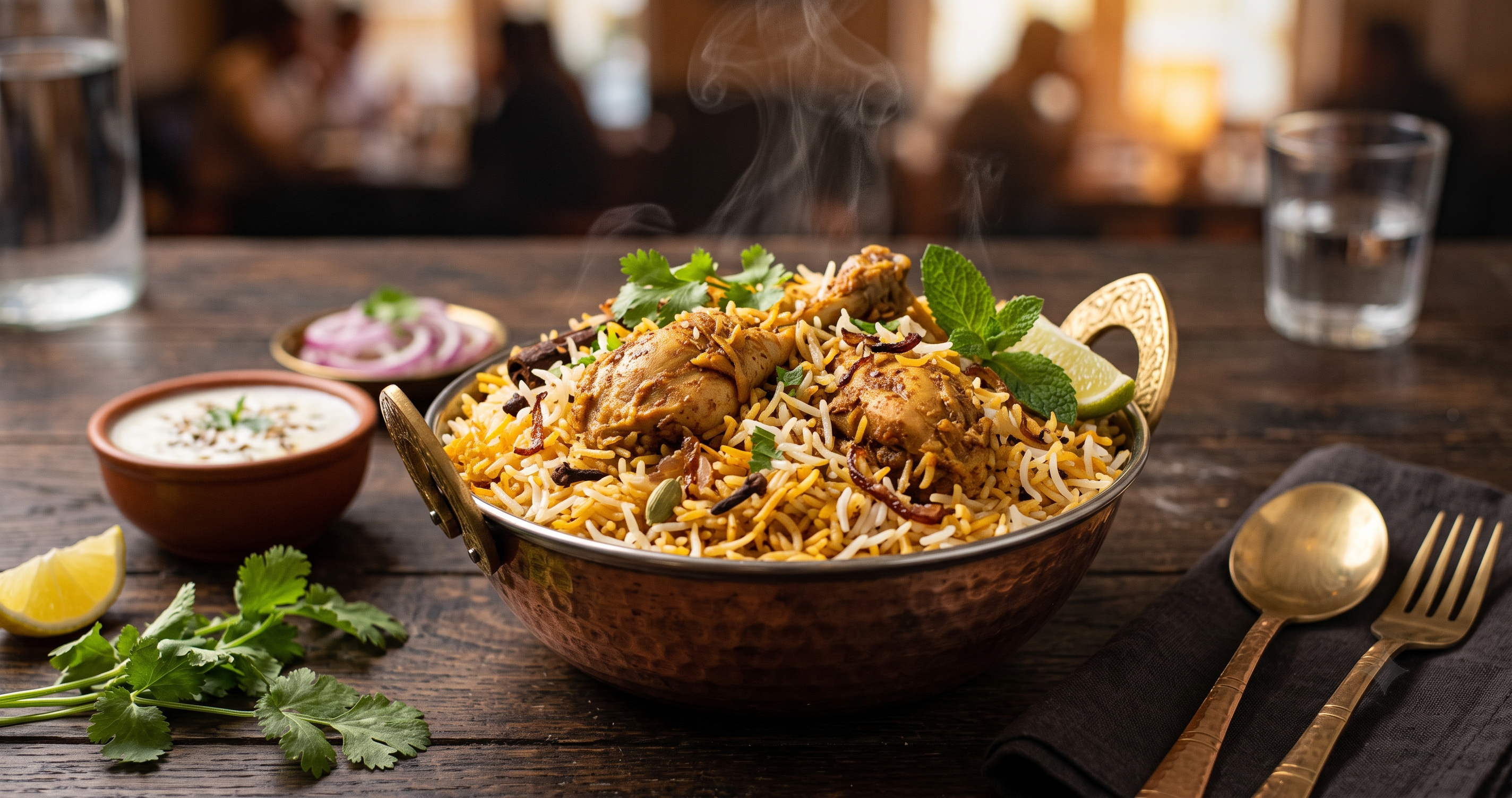
There is nothing quite like a plate of proper chicken biryani carried to your table still sealed under its dough lid, steam escaping the moment it’s cracked open. At Paro, beside the Lyceum Theatre at 21 Wellington Street, London, our kitchen was founded by Chef Niaz on a philosophy tracing back to Kolkata and West Bengal cooking traditions, built around a secret 48-spice mix sourced directly from Indian bazaars. That grounding in authentic technique separates a restaurant-style biryani from a rushed home version, and this article breaks down the real culinary principles behind it, without turning it into a step-by-step recipe card.
What Makes Restaurant-Style Chicken Biryani Different
The gap between a home attempt and a proper restaurant plate usually comes down to layering discipline and heat control, not a secret ingredient. Professional kitchens marinate chicken well in advance so the yogurt, ginger-garlic and ground spices have time to penetrate the meat rather than just coat it. Rice is parboiled separately to a specific stage, still firm at the centre, before it meets the chicken. This two-track preparation is the foundation of every serious chicken dum biryani, and it is why restaurant portions hold their texture even after resting.
The Role of Whole Spices in Building Depth
Ground spice blends give heat and colour, but whole spices give a biryani its aroma the moment the lid comes off. Bay leaf, green and black cardamom, cinnamon bark, cloves and star anise are bloomed in hot ghee before anything else goes into the pot, releasing oils that ground spices cannot replicate. These whole spices are layered through the rice and chicken rather than stirred in evenly, so certain bites carry a burst of cardamom while others taste purely of marinated chicken and saffron-tinted rice. Paro’s kitchen builds on this principle, layering its own 48-spice mix through slow-cooked curries and tandoor classics like butter chicken and lamb shank.
Understanding the Chicken Dum Biryani Cooking Method
Dum, meaning “to breathe” or “steam”, is the technique that finishes a proper biryani. Once the partially cooked chicken and rice are layered in a heavy-bottomed pot, the vessel is sealed, traditionally with a ring of dough pressed around the lid, and left on very low heat. No liquid is added; the moisture already present in the marinated chicken and parboiled rice is enough to finish cooking through trapped steam. This sealed environment lets the rice absorb chicken juices and spice oils without turning mushy, and it is the single biggest reason a well-executed chicken dum biryani tastes layered rather than flat.
Saffron, Fried Onions and the Final Garnish
The finishing touches on a biryani are not decorative afterthoughts; they are structural to the final flavour. Saffron strands soaked briefly in warm milk are drizzled over the top layer before sealing, so as the rice steams, pockets of golden colour and floral aroma form unevenly, which is intentional rather than a flaw. Deep-fried onions, cooked slowly until deep amber and crisp, are scattered between layers and again on top, adding a sweet caramelised note and textural contrast. A scatter of fresh coriander or mint often finishes the dish, cutting through the richness of the ghee.
Chicken Biryani as Part of a Balanced Indian Thali
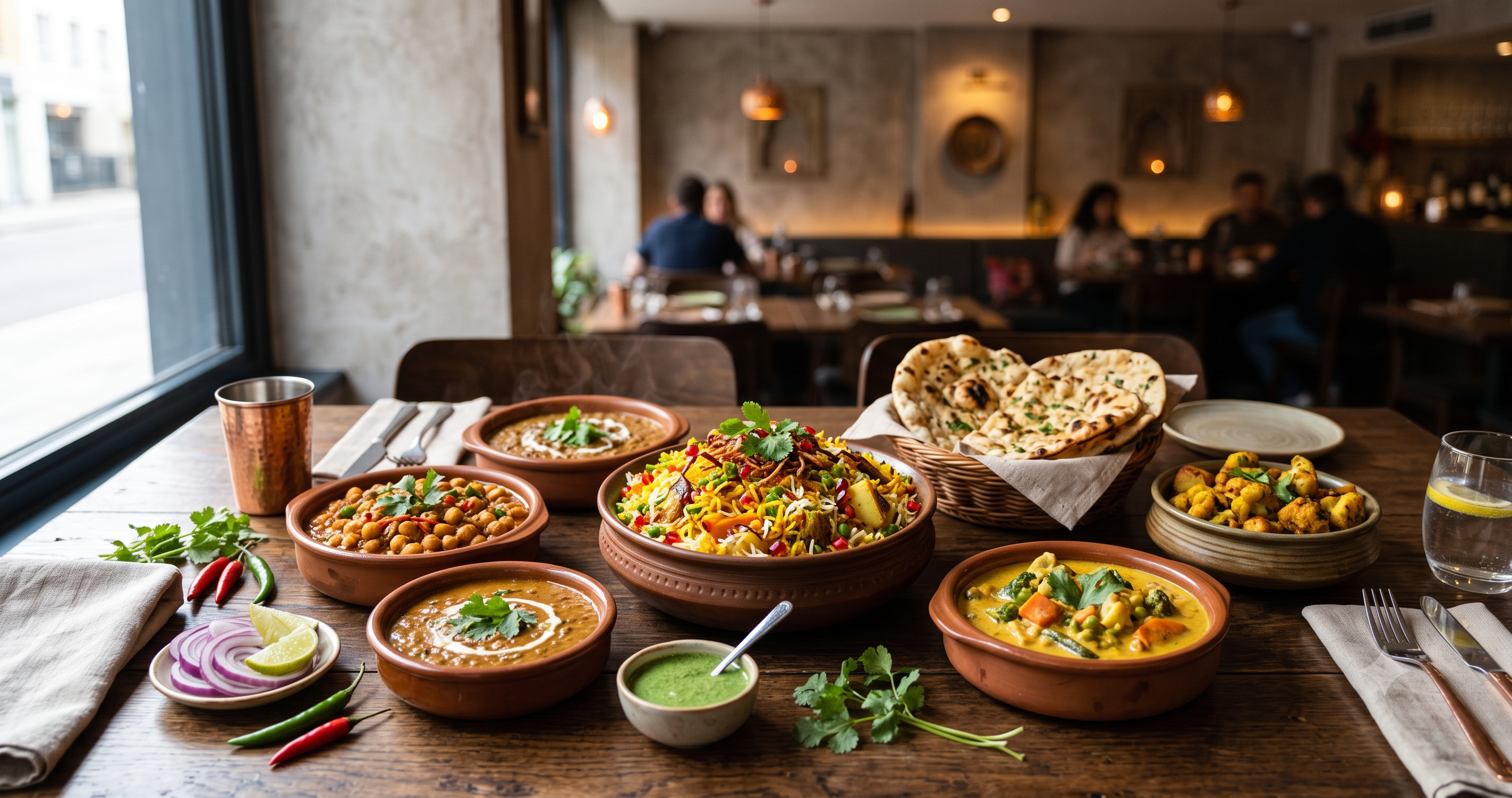
While biryani is often enjoyed as a standalone dish, it also sits naturally within a broader spread. An indian thali typically brings together a rice dish, a couple of curries, a lentil preparation, bread and a small sweet, giving diners a chance to taste contrast across one meal. Paro’s menu is tagged clearly for halal, vegan, vegetarian, gluten-free, dairy-free and nut-free diners, making it straightforward for groups to order a shared thali-style spread alongside individual biryani portions. For anyone searching for the best indian thali london has to offer, that combination of variety and dietary clarity matters as much as the cooking itself.
Pairing Chicken Biryani with the Right Drink
A rich, spice-forward dish like biryani benefits from a drink that cools the palate or complements its warmth. Paro’s Tipples & Cocktails menu includes an Espresso Martini made with Indian coffee beans and the Jab We Met Martini, alongside gin, whisky, vodka, rum, tequila, brandy, cognac and liqueurs. For a more traditional pairing, the dedicated lassi and juice section offers a cooling counterpoint to the dum-cooked spices, while the specialty tea section suits a slower pace. Wine drinkers are covered too, with red, white, rosé, sparkling wine and champagne, plus beer and cider.
Why Location Matters for a Proper Biryani Experience
Good biryani takes time to cook, which means the setting around it matters almost as much as the kitchen technique. Paro sits beside the Lyceum Theatre on Wellington Street, within walking distance of the Strand, making it a genuinely convenient restaurant strand option for an evening in Covent Garden or the West End. As a pre theatre restaurant, it suits guests who want a properly cooked dum biryani before curtain-up, and it works just as well afterwards. With seating for 90 or more guests, private dining for 10 to 60 people, and group bookings welcomed up to 120 with priority seating near the largest screen, it accommodates everything from a quiet dinner to a larger celebration.
Booking, Timing and Practical Details
Restaurant-quality biryani is worth planning around, especially on busy evenings. Paro is open Monday and Tuesday from 3:00pm to 10:30pm, Wednesday to Saturday from 12:00pm to 11:00pm, and Sunday from 12:00pm to 10:30pm. Booking online or by phone is recommended, particularly Thursday through Saturday and on theatre evenings, though walk-ins are welcome subject to availability. For anyone typing indian restaurant near me near the Strand, Paro’s location beside the Lyceum makes it an easy, walkable choice, reachable at +44 20 3722 0951 or info@paroindian.com.
Final Thoughts
Getting chicken biryani right is less about a single secret ingredient and more about respecting every stage: a properly rested marinade, whole spices bloomed with intention, a genuine dum seal that traps steam rather than liquid, and a finishing touch of saffron and fried onions that ties the dish together. That layered approach, rooted in Chef Niaz’s Kolkata-influenced kitchen and its 48-spice mix, turns rice and chicken into something worth planning an evening around. Whether paired with an Espresso Martini, shared as part of a wider thali spread, or enjoyed as a pre-theatre dinner near the Lyceum, the underlying technique is what makes the difference.
FAQs
What is the difference between chicken biryani and chicken dum biryani?
Chicken biryani is the general dish name, while chicken dum biryani refers to the sealed, slow-steamed method where marinated chicken and parboiled rice finish cooking together without added liquid.
Does Paro’s biryani menu cater to different dietary needs?
Yes, Paro’s menu is tagged for halal, vegan, vegetarian, gluten-free, dairy-free and nut-free diners, making it easier for groups with varied requirements to order together.
Is Paro a good option for a pre-theatre dinner?
Yes, Paro sits beside the Lyceum Theatre on Wellington Street within walking distance of the Strand, and its hours support both pre-show and post-show dining.
Can large groups book a biryani-focused dinner at Paro?
Paro seats 90 or more guests, offers private dining for 10 to 60 people, and welcomes group bookings up to 120 with priority seating near the largest screen.
What drinks pair well with a rich biryani at Paro?
Options include the Espresso Martini made with Indian coffee beans, the Jab We Met Martini, a dedicated lassi and juice section, specialty teas, and a full wine, beer and cider list.