Any working indian spices list looks very different behind a professional tandoor line than on a home spice rack, because a chef manages timing, heat and sequence, not just ingredients. At Paro, beside the Lyceum Theatre on Wellington Street, Chef Niaz built the kitchen around a secret 48-spice mix sourced from Indian bazaars, rooted in Kolkata and West Bengal tradition but shaped with contemporary technique. That reveals what most spice guides miss: professional cooking isn’t about owning more jars, it’s about knowing which spices go in whole, which go in ground, and in what order. This piece covers that kitchen-craft angle, not the pantry-shelf version.
Whole Versus Ground: The First Decision On Every Indian Spices List
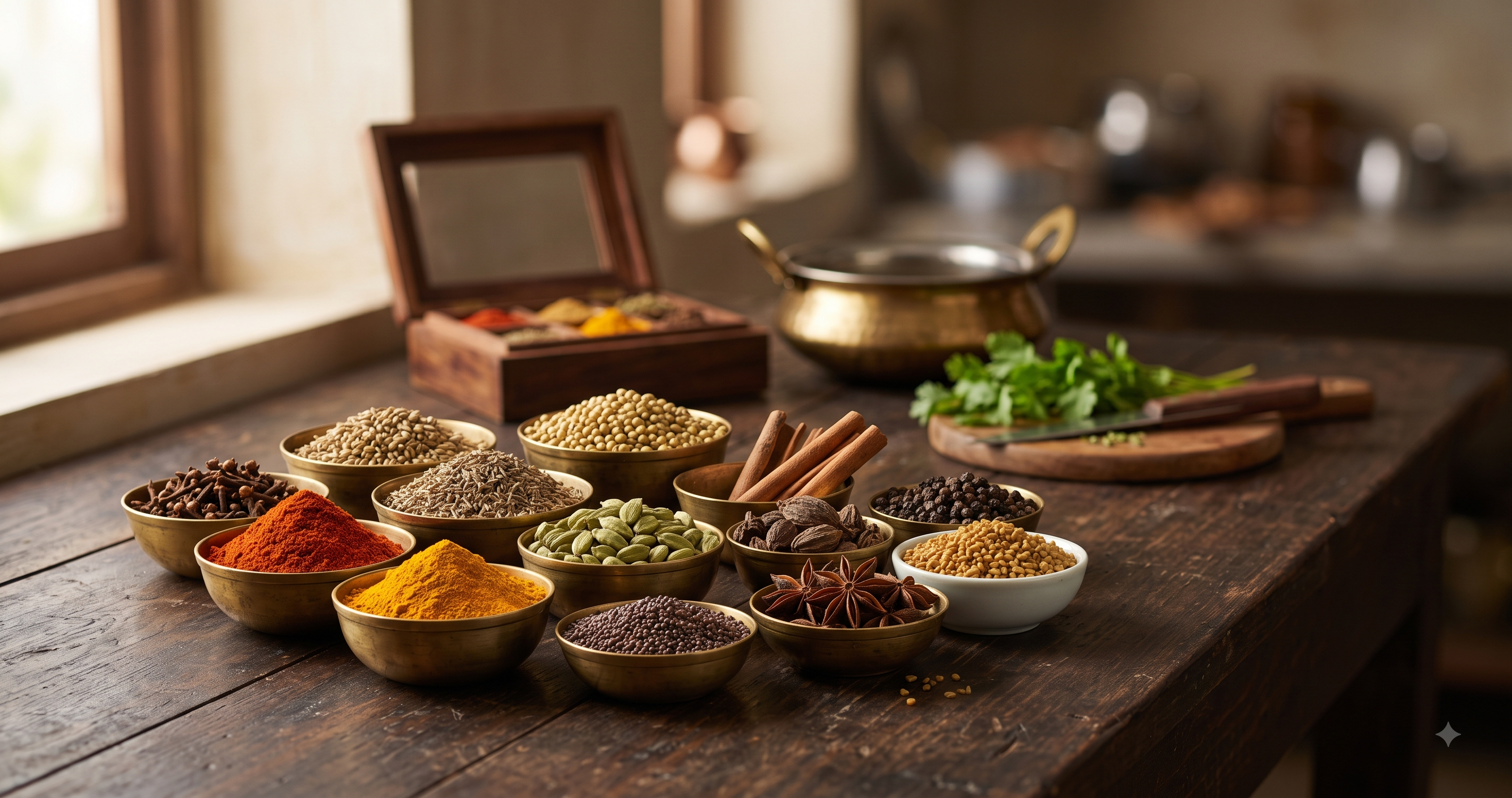
Every professional cook decides whether a spice needs to release its oils slowly in fat or hit the dish instantly as fine powder. Whole spices like cumin seeds, mustard seeds, cinnamon bark, green cardamom, cloves and bay leaves survive high heat without scorching, so they go into oil or ghee first. Ground spices such as turmeric, red chilli powder, coriander powder and ground cumin are more delicate and burn fast, so they’re added once the pan has cooled or liquid is present. A chef reading any indian spices list needs to separate these categories immediately, because getting the order wrong is the most common reason a curry tastes flat rather than layered.
Tempering And Tadka: The Technique Behind Real Flavour
Tempering, known as tadka, is the technique that separates restaurant-standard curries from anything mixed together in one pot. Whole spices are dropped into hot oil or ghee for seconds until they crackle and release their oils, which becomes the base everything else is built on. Too cool and the spices stay raw-tasting; too hot and they turn bitter. This is a skill built through repetition, which is part of why Chef Niaz’s approach at Paro treats the kitchen’s spice blend as guarded rather than simply listed on a menu.
Roasting Spices To Unlock Deeper Aroma
Beyond tempering in fat, dry roasting is a separate technique many home cooks skip. Whole coriander seeds, cumin seeds, fennel and dried red chillies are toasted in a dry pan until fragrant, then ground fresh, since pre-ground spices lose aromatic oils within weeks. This is central to how indian spices develop the toasted, nutty depth found in tandoor-fired classics and slow-cooked curries alike. Restaurants that grind in small batches, rather than buying pre-ground tins, do so because the flavour difference is noticeable within a bite.
Building A Garam Masala From Scratch
Garam masala isn’t one fixed recipe, it’s a warming blend every kitchen tunes to its own style, and this is where a 48-spice mix like the one behind Paro’s kitchen becomes a genuine point of difference. A base blend typically leans on cinnamon, cloves, cardamom, black pepper and cumin, but the exact ratios determine whether the flavour reads as sweet, smoky, or peppery. Chefs add garam masala late, often right at the end, because its aromatic compounds dissipate quickly under prolonged heat. This shows why a written indian spices list only tells half the story; ratio and timing matter as much as the ingredients themselves.
Balancing Heat, Aromatics And Acidity Across An Indian Curries List
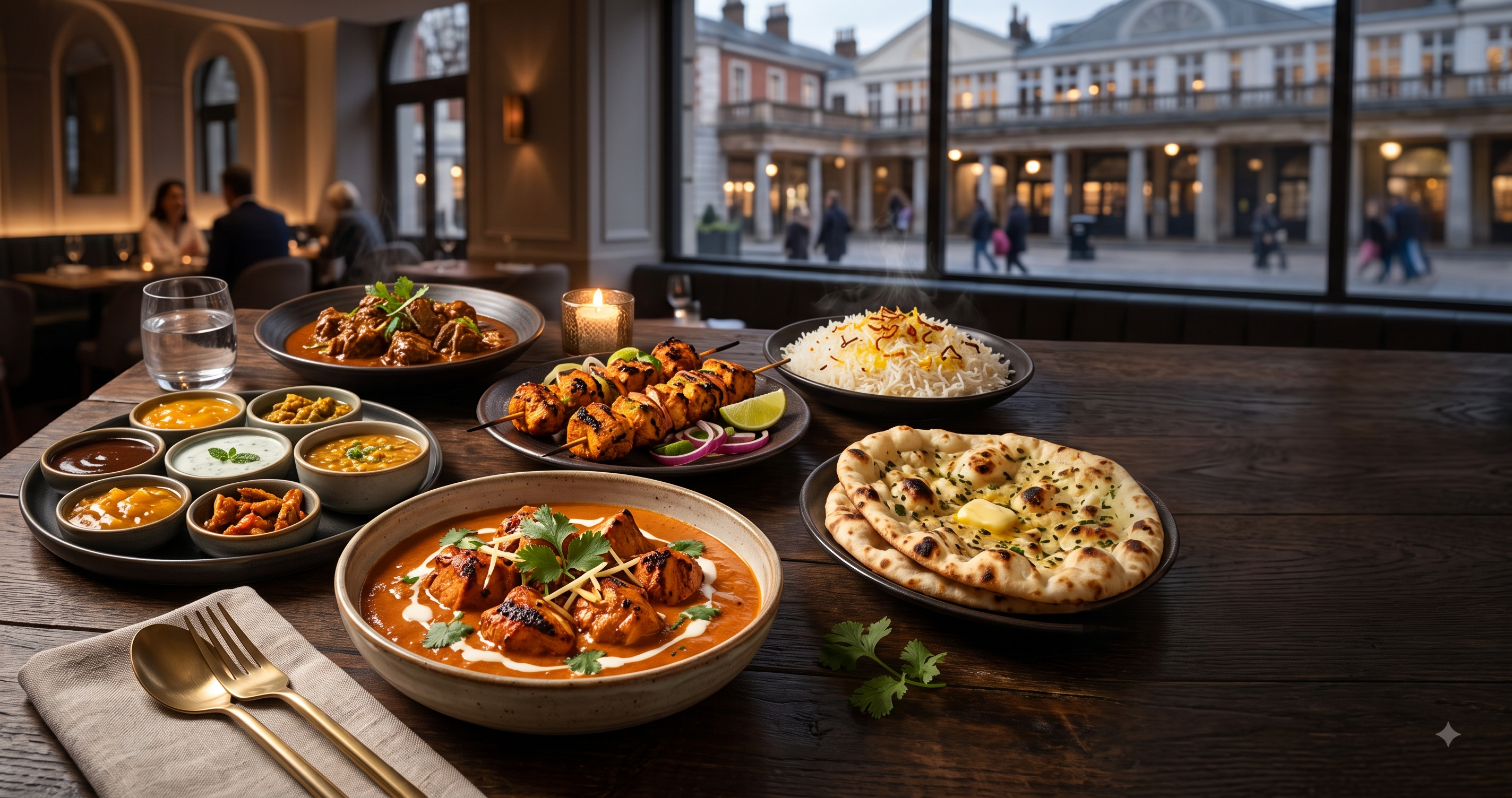
A well-run kitchen doesn’t treat spice as a dial that only goes from mild to hot. Chilli powder, green chillies and black pepper control heat, but cardamom, cinnamon and cloves supply aromatic warmth, while tamarind, tomato and yoghurt bring acidity that cuts through richness. Reading any indian curries list, from a butter chicken to a lamb shank, shows how each dish balances these elements differently rather than simply using more or less chilli. Butter chicken leans on tomato sweetness and cream, while a slow-cooked lamb shank benefits from deeper, more assertive whole spices that stand up to hours of braising.
How A Thali Demonstrates Spice Range In One Sitting
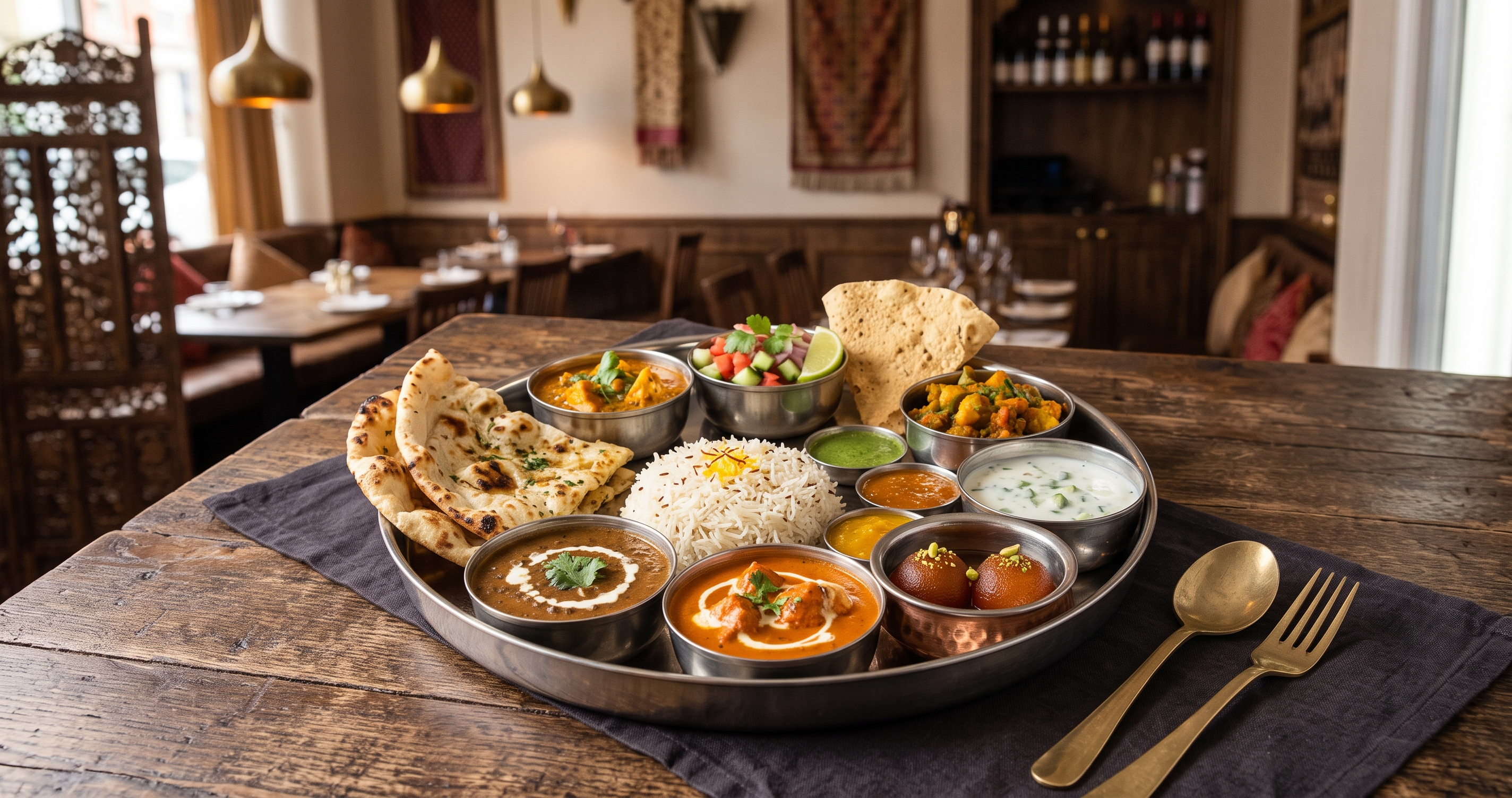
Nowhere is a kitchen’s spice knowledge more visible than in a thali, which places several small dishes side by side on one plate. An indian thali typically pairs a dry-spiced vegetable dish, a wetter dal, a yoghurt-based side and a tangy pickle, each drawing on a different corner of the spice cupboard rather than repeating the same blend. Building a balanced thali is a genuine test of range: it proves the kitchen can shift from earthy, roasted spicing in one dish to a lighter, tempered approach in the next, all without one dish overpowering another.
What Defines The Best Indian Curry On A Restaurant Menu
Ask chefs what makes the best indian curry and most will point to spice layering rather than any single “secret” ingredient: whole spices tempered in fat for the base, ground spices simmered into the sauce for body, and a finishing touch of garam masala at the very end. Traditional curries, including tandoor-fired classics, rely on that sequence far more than chilli quantity. It’s also why menus built around dietary tagging, such as halal, vegan, vegetarian, gluten-free, dairy-free and nut-free options, still need every dish spiced with intention rather than adjusted from one master recipe.
Beyond The Plate: Spice Thinking In Drinks And Dining Format
Spice knowledge in a well-rounded Indian kitchen doesn’t stop at the curry pot. An Espresso Martini made with Indian coffee beans, or a Jab We Met Martini from a dedicated Tipples & Cocktails menu, draws on the same instinct for balancing warmth, bitterness and sweetness that governs a good curry. That instinct extends to dining format too. With seating for 90-plus guests, private dining for 10 to 60 people, and group bookings for up to 120 with priority seating near the largest screen, a kitchen must scale spice consistency across many plates cooked in sequence. Booking ahead, particularly Thursday to Saturday or before an evening at the Lyceum Theatre, gives the kitchen time to manage that volume properly.
Final Thoughts
A genuinely useful indian spices list is less about which jars sit on a shelf and more about sequence, technique and restraint: whole spices tempered first, ground spices added with care, and garam masala blended to the kitchen’s own standard. At Paro, that philosophy sits behind Chef Niaz’s 48-spice mix and shows up across everything from a butter chicken to a slow-cooked lamb shank, whether you’re seated for a quick pre-theatre meal or a private dining booking. It explains why two kitchens using the same named spices can produce entirely different results.
FAQs
What is the difference between whole and ground spices?
Whole spices release flavour slowly and go into hot oil or ghee early, while ground spices are more delicate, burn faster, and are usually added later or with liquid in the pan.
What is tadka or tempering?
Tadka is briefly frying whole spices in hot oil or ghee until they crackle, infusing the fat with aroma before it becomes the base of a dish.
Why do chefs roast spices before grinding them?
Dry roasting releases essential oils and deepens aroma, giving a noticeably fresher flavour than pre-ground spices that have sat for weeks.
Does every curry use the same spice blend?
No, dishes like butter chicken and lamb shank use different ratios of heat, aromatics and acidity, which is why an indian curries list varies from dish to dish.
What makes Paro’s spice approach distinctive?
Paro’s kitchen is built around a secret 48-spice mix developed by Chef Niaz, sourced from Indian bazaars and rooted in Kolkata and West Bengal tradition.