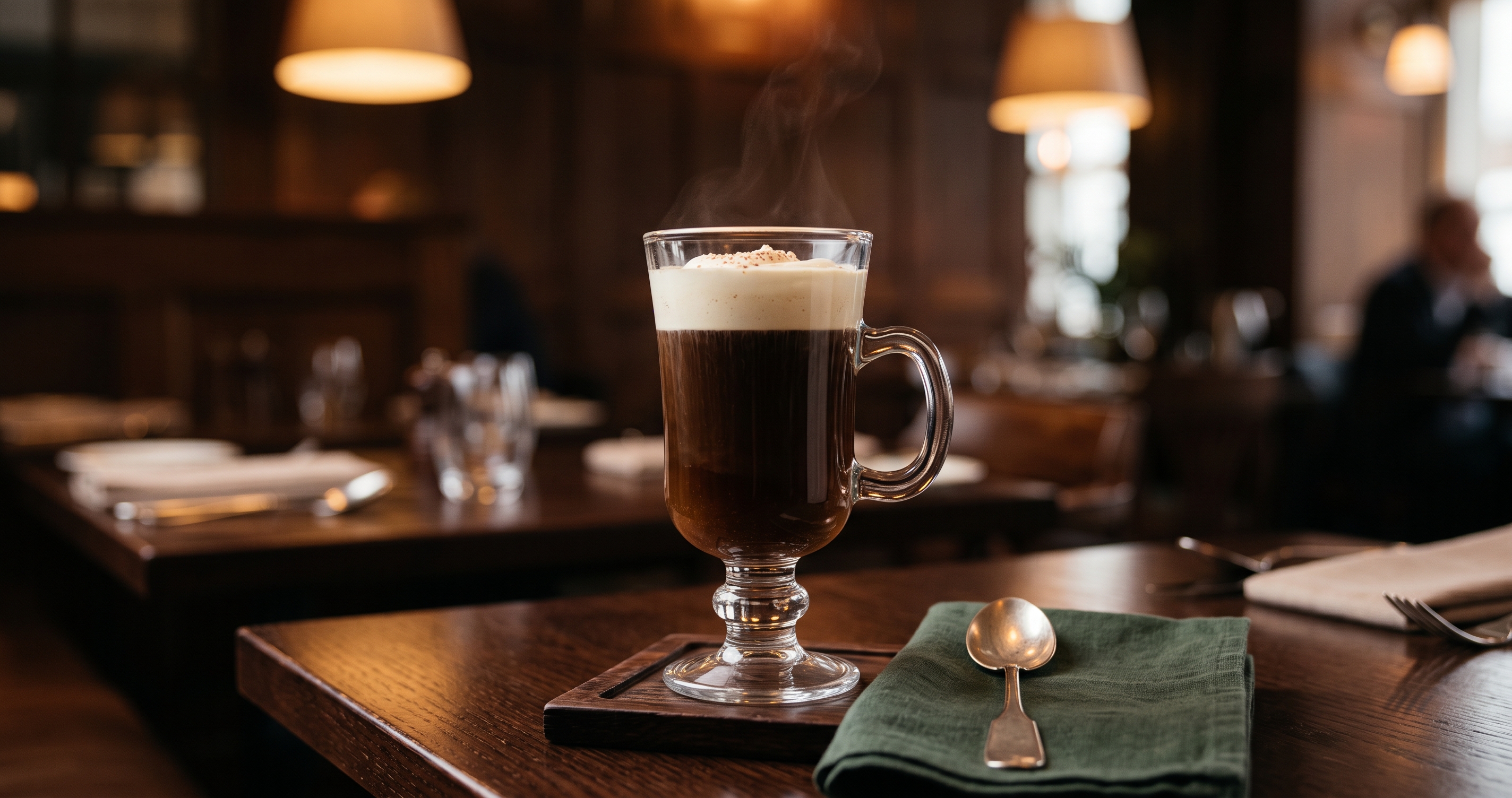
A good Irish coffee is hot, sweet coffee with whiskey underneath and a cold, thick layer of cream sitting on top. It fails for five reasons: a cold glass, too little sugar, the wrong cream consistency, weak or scorched coffee, and a heavy whiskey pour. Fix those five and the cream floats every time.
Why is an Indian kitchen writing about Irish coffee?
Fair question. We spend our days on the 48 spices in our house blend and how long a dal needs on a low flame. But the things that make a dish work at the pass make a drink work too: temperature, density, sweetness and timing.
The drink also has a story we like. The usual telling is that Joe Sheridan, a chef at the flying-boat terminal at Foynes in County Limerick, served whiskey-laced coffee to cold transatlantic passengers in the early 1940s, and that travel writer Stanton Delaplane carried the idea to the Buena Vista Cafe in San Francisco in the early 1950s. The exact year is debated, but the outline is widely accepted. It was a cook’s answer to a practical problem: warm people up fast.
Mistake 1: Why does a cold glass ruin the drink?
The whole point is contrast. Hot coffee below, cold cream above. If you pour hot coffee into a cold, thick-walled glass, the glass steals heat immediately. By the time the cream goes on, the coffee is merely warm, the contrast is gone and the drink tastes flat.
The fix takes thirty seconds. Fill the glass with hot water from the kettle, leave it while you brew the coffee, then tip it out just before building the drink. A stemmed glass of around 200 to 240ml holds heat well and shows off the layers.
Mistake 2: Why does the cream sink if you skip the sugar?
This is the mistake that surprises people most. Sugar is not only there for sweetness. Dissolved sugar makes the coffee denser, and a denser liquid supports a lighter one on top. Lightly whipped cream is full of tiny air bubbles and fat, so it is less dense than sweetened coffee. Without sugar, the gap between the two narrows and the cream is far more likely to break through and muddy the drink.
Use brown sugar, ideally demerara or soft light brown. About two teaspoons (roughly 8 to 10g) for a standard glass is the usual range. The key word is dissolved. Stir the sugar into the hot coffee until no grains remain before the whiskey goes in. Undissolved crystals sitting at the bottom do nothing for density and leave a gritty last sip.
Mistake 3: What is the right consistency for the cream?
Cream causes more failed glasses than anything else, and it can go wrong in both directions.
Pour unwhipped single cream on top and it sinks straight through. Use aerosol cream and it sits up stiffly, tastes sweet and synthetic, then collapses into foam. Whip double cream to stiff peaks and it floats, but it sits like a lid and you cannot drink the coffee through it.
What you want is double cream (or whipping cream) shaken or whisked just until it thickens to a loose, pourable ribbon. It should coat the back of a spoon and fall in a slow, thick stream. The easiest home method: put about 50ml of very cold cream in a clean jar, close the lid and shake hard for 15 to 25 seconds. Check it. If it pours like thin custard and holds a soft trail on the surface, stop.
Keep the cream cold until the last second. Then pour it gently over the back of a warm spoon held just above the surface of the coffee, so it spreads rather than plunging. You should end up with a layer about 1.5 to 2cm thick.
Mistake 4: Which coffee works, and how hot should it be?
Weak coffee gets lost under the whiskey and sugar. Stewed or boiled coffee turns bitter and ashy.
A freshly brewed filter, cafetière or long americano made with medium-roast beans is the classic base. You want body and roundness rather than sharp acidity. For a cafetière, around 15 to 18g of medium-ground coffee to 250ml of water just off the boil (roughly 93 to 96°C), steeped for four minutes, gives the right strength. Espresso on its own is too concentrated and too small; lengthen it with hot water.
Mistake 5: How much whiskey is too much?
A heavy pour throws off the balance and cools the drink. Around 35 to 40ml of Irish whiskey to roughly 120ml of coffee is the traditional proportion. Smooth, triple-distilled blended Irish whiskeys suit it because they bring vanilla and malt rather than smoke. Heavily peated Scotch will dominate and taste out of place.
Add the whiskey after the sugar has dissolved, give one gentle stir, then let the surface settle for a few seconds before floating the cream. And do not stir once the cream is on. The drink is meant to be sipped through the cream layer, so each mouthful is cold and silky first, then hot and sweet.
Our tested Irish coffee recipe, step by step
Here is the Irish coffee recipe we would hand to a friend. It answers the question of how to make Irish coffee without any special equipment.
- Fill a 200 to 240ml heatproof glass with hot water. Leave for two minutes.
- Brew strong medium-roast coffee (a cafetière at about 15 to 18g per 250ml works well).
- Shake 50ml of cold double cream in a jar for 15 to 25 seconds until it thickens to a pourable ribbon. Keep it cold.
- Empty the glass. Add two teaspoons of demerara sugar and about 120ml of hot coffee. Stir until fully dissolved.
- Add 35 to 40ml of Irish whiskey. Stir once and let it settle.
- Pour the cream slowly over the back of a warm spoon, just above the surface, to a layer of 1.5 to 2cm.
- Serve at once. Do not stir.
| Problem you see | Likely cause | Fix |
|---|---|---|
| Cream sinks and clouds the coffee | No sugar, or cream too thin | Dissolve 8 to 10g sugar; whip cream to a loose ribbon |
| Cream sits stiff like a lid | Over-whipped | Shake for less time; stop at pourable |
| Drink is lukewarm | Cold glass or over-sized whiskey pour | Preheat the glass; keep whiskey to 35 to 40ml |
| Bitter, burnt flavour | Stewed or boiled coffee | Brew fresh, water just off the boil |
| Gritty last sip | Undissolved sugar | Stir fully before adding whiskey |
Where does this fit after an Indian meal?
After a slow-cooked lamb curry or a plate of tandoori dishes, many guests want something sweet, warm and short rather than a heavy dessert. A well-made Irish coffee fits that slot. The cream softens the lingering heat of chilli, and the brown sugar and whiskey pick up the warm notes of cinnamon, clove and cardamom that run through so much of what comes out of our kitchen.
If a cream-topped coffee is your idea of the perfect finish, ask the Paro team what is on the drinks list that evening.
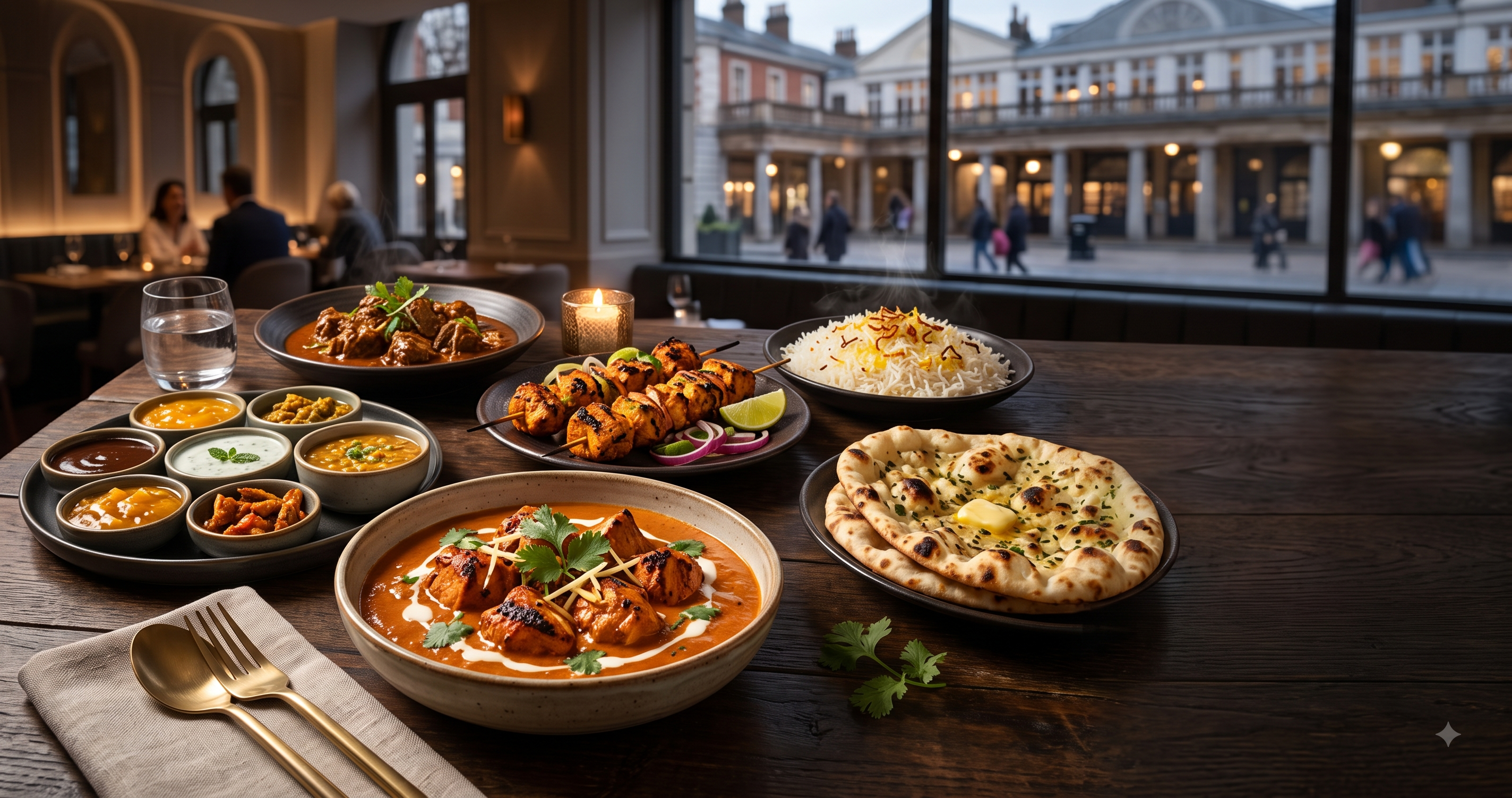
For anyone comparing the best Indian restaurants Covent Garden has to offer, our location matters too. Paro sits at 21 Wellington Street, right beside the Lyceum Theatre, so it suits a slow dinner and a warm drink before or after a show. If you were searching for an Indian restaurant Holborn side, the walk down to Wellington Street takes only a few minutes. The menu is tagged for halal, vegan, vegetarian, gluten-free, dairy-free and nut-free diners.
Key Takeaways
- Preheat the glass and spoon; the drink relies on hot coffee meeting cold cream.
- Dissolve about two teaspoons of brown sugar fully, as it adds the density that helps the cream float.
- Whip double cream only to a loose, pourable ribbon and pour it over the back of a spoon.
- Use fresh, medium-roast coffee and keep the whiskey to around 35 to 40ml.
- Never stir once the cream is on.
Frequently Asked Questions
Why does the cream sink in my Irish coffee?
Usually because no sugar is dissolved in the coffee, or the cream is too thin. Dissolved sugar makes the coffee denser so the aerated cream can float.
Can I use squirty cream?
It will sit on top, but it tastes sweeter and more artificial and it collapses quickly into foam. Lightly whipped double cream gives a cleaner flavour and a silkier texture. It only takes about 20 seconds of shaking in a jar.
Should Irish coffee be stirred?
Stir the sugar and whiskey into the coffee before the cream goes on, then stop. The drink is sipped through the cold cream into the hot coffee below. Stirring afterwards destroys the contrast.
Can I make a non-alcoholic version?
Yes. Leave out the whiskey and keep everything else the same: hot glass, dissolved brown sugar, fresh coffee and lightly whipped cream. A pinch of ground cardamom in the coffee adds warmth without alcohol.
Final Thoughts
The best Irish coffee comes down to a few simple rules most people skip: heat the glass, dissolve the sugar, whip the cream only a little, brew the coffee fresh and keep the whiskey modest. Get those right and the layers hold. When you are next in Covent Garden for a show, come and eat with us at Paro, and finish the evening however you like best.