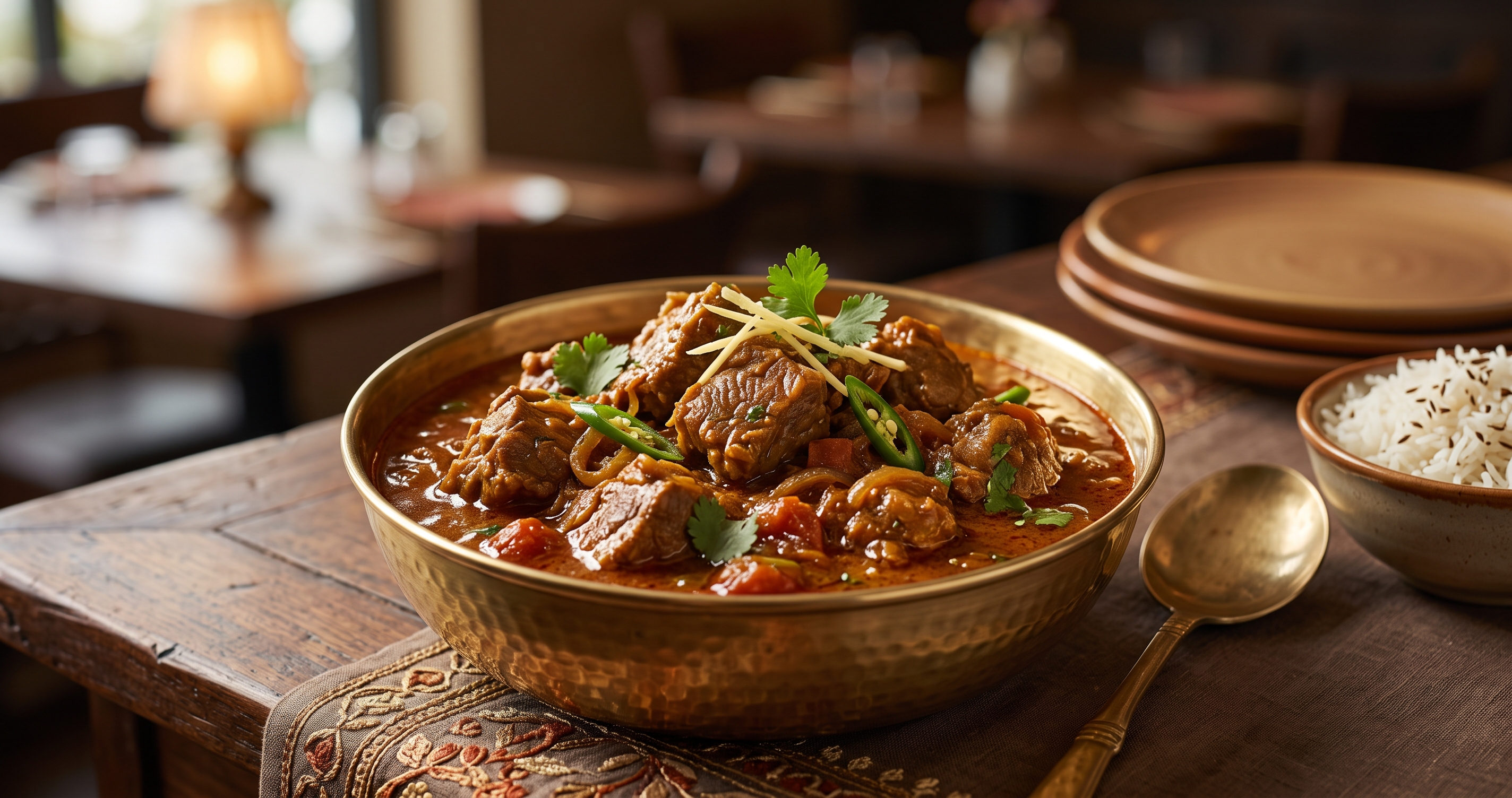
Railway lamb curry differs from other lamb curries in three ways: it was designed for travel, it is milder, and it is thinner. Born in the dining cars and station refreshment rooms of colonial India, it uses a gentle spice level, a sour note from tamarind or yoghurt, and chunks of potato to stretch the meat. The result is homely, tangy and comforting.
It is one of those dishes with more story than recipe, and the story matters because it explains the flavour. Our kitchen’s roots are in Kolkata and West Bengal, where the railway left a deep mark on what people cook and eat, so this one is close to home for Chef Niaz.
Where does railway lamb curry come from?
The Indian railway network expanded rapidly from the 1850s onwards, and long-distance trains needed food. First-class carriages and station refreshment rooms catered largely to British officers and their families, and the cooks who fed them developed a style of curry that would suit those passengers and survive long journeys.
Most versions of the story agree on a few points:
- The dish was made milder than the curries cooks would eat at home, to suit British palates.
- Something sour, usually tamarind, vinegar or yoghurt, was added, partly for flavour and, it is often said, to help the curry keep in hot conditions without refrigeration.
- Potatoes went in to bulk out the meat.
In India the dish is usually called railway mutton curry, and “mutton” there often means goat. In the UK it is generally cooked with lamb. Beyond those broad strokes, the details are fuzzy. You will hear anecdotes about a particular train, a particular officer who complained about the heat, a particular cook who added yoghurt to calm it down. These make good stories, but they are hard to verify, so we treat them as folklore rather than fact.
How is it different from a rogan josh or a bhuna?
Lamb curries vary enormously across India. Here is how the railway version sits alongside a few that London diners already know.
| Curry | Region / origin | Heat | Texture | Defining feature |
|---|---|---|---|---|
| Railway curry | Colonial-era railways, strongly associated with Bengal | Mild to medium | Thin, loose gravy | Tamarind or yoghurt sourness, potatoes |
| Rogan josh | Kashmir | Mild, deep red | Rich, oily gravy | Kashmiri chilli, fennel, dried ginger |
| Kosha mangsho | Bengal | Medium to hot | Very thick, almost dry | Long slow “kosha” frying in mustard oil |
| Lamb bhuna | North India and British curry houses | Medium | Thick, clinging | Spices fried hard until oil separates |
| Lamb korma | Mughal courts | Mild | Creamy | Nuts, cream or yoghurt, aromatic sweetness |
The quickest way to put it: a kosha mangsho is a Sunday showpiece, intense and glossy. A railway lamb curry is what you would want after a long day of travelling, soupy enough to mop up with rice or bread, tangy enough to wake you up.
What gives it that tangy, homely flavour?
Three things working together.
Sourness. Tamarind is the most common choice in Bengal-leaning versions, though some cooks use yoghurt or a dash of vinegar. Acid brightens the gravy and balances the richness of lamb fat. It is a technique cooks have long used in hot climates, where sour flavours were thought to help food keep.
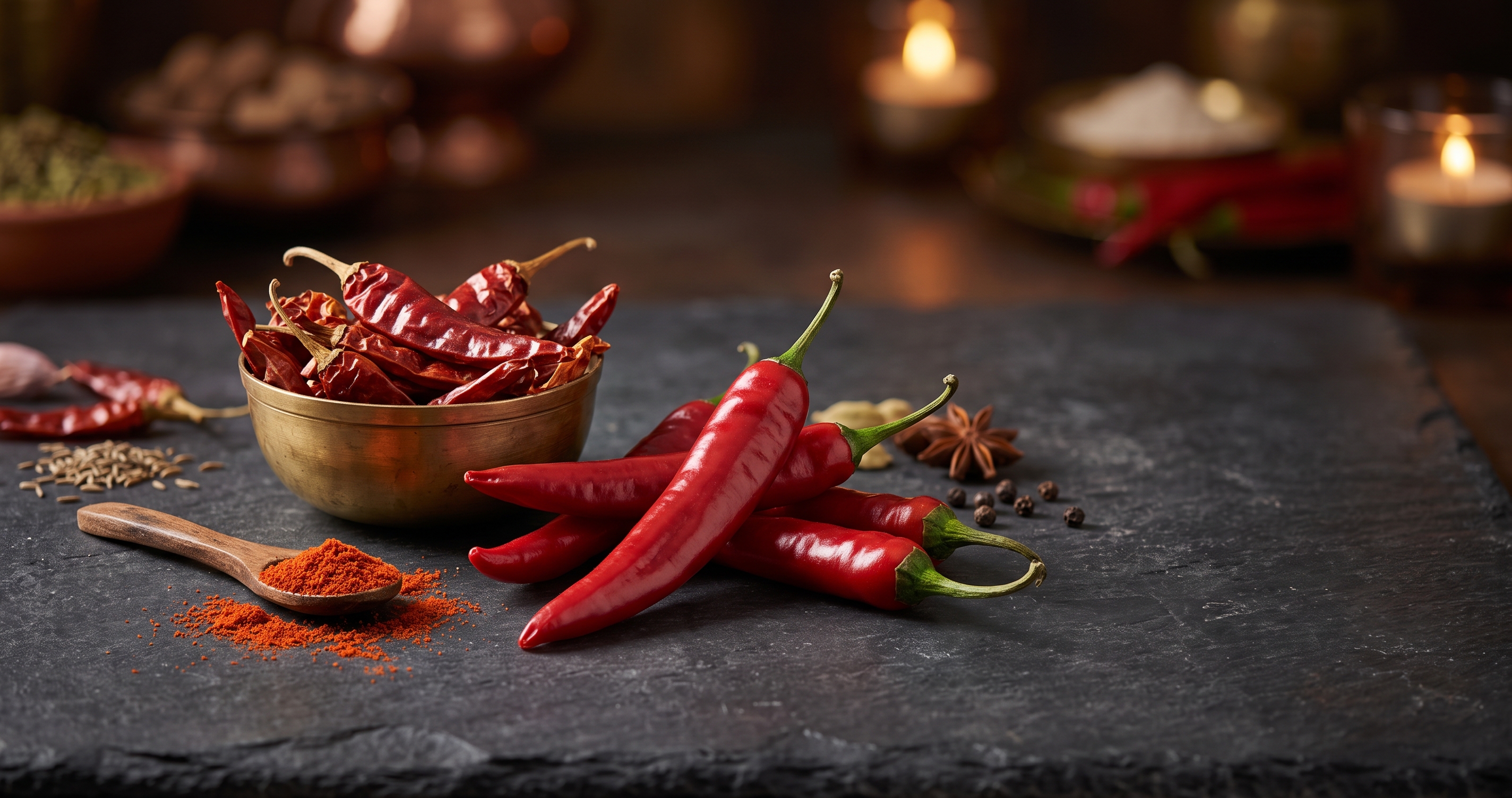
Whole spices rather than heavy ground masala. Bay leaf, cinnamon, green cardamom and cloves go into hot oil first. Ground spices are used, but sparingly, so the gravy stays light and aromatic rather than dense.
Potatoes. Waxy potatoes cooked in the gravy absorb the spiced fat and soften at the edges, slightly thickening the sauce as their starch leaches out. In Kolkata, potato in meat dishes is something close to a cultural institution (it famously turns up in the city’s biryani too), so it feels natural here.
How do you cook a railway curry at home?
This serves four. Use bone-in lamb shoulder if you can; the bones and collagen give the thin gravy body.
Ingredients: 1 kg bone-in lamb shoulder in 4 cm pieces; 150 g full-fat yoghurt; 1 tbsp ginger-garlic paste; 1 tsp Kashmiri chilli powder; ½ tsp turmeric; 1½ tsp salt; 4 tbsp mustard oil or vegetable oil; 2 bay leaves; 5 cm cinnamon stick; 4 green cardamom pods; 4 cloves; 2 large onions, finely sliced; 2 tsp ground coriander; 1 tsp ground cumin; 2 medium waxy potatoes, halved; 2 tbsp tamarind paste (or juice of 1 lemon); 600 ml hot water; ½ tsp garam masala.
- Marinate. Mix the lamb with yoghurt, ginger-garlic paste, chilli, turmeric and salt. Leave for at least 2 hours, ideally overnight in the fridge.
- Temper. Heat the oil in a heavy pan until it just smokes (essential with mustard oil, to mellow its raw pungency), then lower the heat. Add bay, cinnamon, cardamom and cloves; fry for 30 seconds until fragrant.
- Brown the onions. Add the onions and cook over medium heat for 12 to 15 minutes until deep golden. Do not rush this; it is where the sweetness comes from.
- Add the lamb. Turn the heat up, add the meat and its marinade, and fry, stirring, for 10 minutes until the yoghurt has reduced and the oil starts to separate at the edges.
- Spice and simmer. Stir in coriander and cumin for 1 minute, then add the hot water. Cover and simmer gently for 50 minutes.
- Potatoes and tamarind. Add the potatoes and tamarind. Simmer uncovered for 25 to 30 minutes, until the lamb is tender and the potatoes are cooked through.
- Finish. Sprinkle with garam masala, rest for 10 minutes and check the salt.
The gravy should be pourable, not thick. If it reduces too far, loosen it with a splash of hot water.
What mistakes do cooks make with it?
- Making it too hot. It is meant to be gentle. Heat should support the lamb, not dominate.
- Thickening the gravy. No cream, no ground nuts. A thick railway curry has become a different dish.
- Adding tamarind too early. Acid can slow the softening of potatoes; add it with them, or after they have started cooking.
- Using lean meat. Leg dries out. Shoulder, with its fat and connective tissue, turns silky.
Where can you eat a great lamb curry in London’s West End?
Curry is probably the most debated dish in the capital, and choosing an Indian restaurant London wide can feel overwhelming. Our advice: look for a kitchen that can tell you where a dish comes from and why it tastes the way it does. That is usually a sign of cooks who care.
At Paro, our kitchen is rooted in Kolkata and West Bengal, and Chef Niaz builds his lamb dishes on a house 48-spice mix rather than a generic powder. People searching for the best curry Covent Garden has to offer, or simply an Indian restaurant West End theatregoers can rely on, find us at 21 Wellington Street, beside the Lyceum Theatre. Menus change, so ask the team which lamb dishes are on when you visit and how they are spiced. Our menu is tagged for halal diners, among other dietary needs.
Frequently Asked Questions
Is railway lamb curry spicy?
It is usually mild to medium. The dish was historically toned down for British passengers, and its flavour comes more from whole spices and tamarind than from chilli heat.
Why does railway curry have potatoes in it?
Potatoes stretched expensive meat further and soaked up the spiced gravy. They also release starch that gives the thin sauce a little body.
Is railway mutton curry made with goat or lamb?
In India, “mutton” commonly means goat, and that is what many traditional versions use. In the UK the dish is usually made with lamb, which cooks a little faster.
Can I make a railway-style curry ahead of time?
Yes. Like most slow-cooked curries it tastes better the next day once the spices have settled. Cool it quickly, refrigerate, and reheat gently until piping hot.
What should I eat with a railway curry?
Plain steamed basmati is the classic match, because the thin gravy soaks into it. Soft flatbreads also work well for mopping up.
Final Thoughts
Railway lamb curry is proof that some of the best dishes come from practical problems: long journeys, hot weather, fussy passengers. It is light, sour, warming and quietly addictive.
If you want an Indian kitchen that understands that kind of history, come and see us at Paro. If you are hunting for the best Indian restaurant West End London has for a relaxed meal before or after a show, we would love the chance to cook for you.