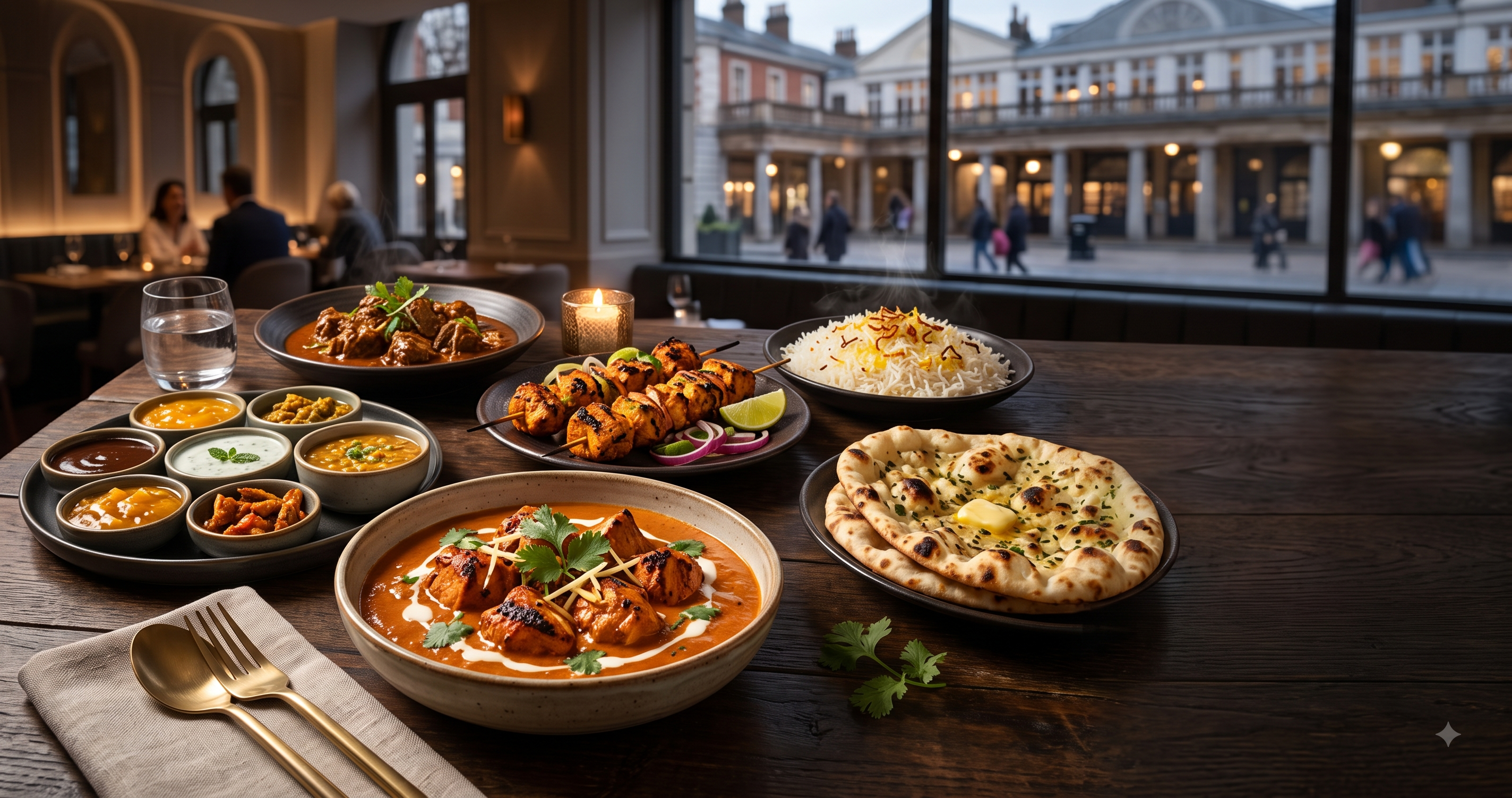
Modern Indian Covent Garden menus can look unfamiliar at first, but most are built on a small set of cooking techniques and regional styles. Learn a dozen key words (bhuna, dum, tarka, jhol and a few more) and you can read almost any menu, order with confidence and find dishes far beyond the familiar curry-house list.
That is what this guide is for. We write menus for a living, and we know how much a single unexplained word can put people off a dish they would love. So here is the vocabulary, the logic, and a few honest tips from the people on the other side of the pass.
What does “modern Indian” actually mean?
The phrase gets used loosely, so it helps to be clear. In London, “modern Indian” usually means some combination of four things:
- Regional focus. Instead of one menu drawn from everywhere, the kitchen cooks from a particular part of India.
- Smaller, shareable plates. Dishes designed to be ordered in several rounds rather than one main each.
- Lighter technique. Less reliance on cream and butter, more on grilling, steaming and tempering.
- Thoughtful presentation. The food is plated with care, though the flavours remain rooted in tradition.
What it should not mean is gimmickry. The best modern Indian cooking still tastes recognisably of its region. A technique might be refined, a plate might look different, but the spice logic underneath stays true.
At Paro, Chef Niaz leads the kitchen and cooks from Kolkata and West Bengal traditions, with every dish built on our house 48-spice mix. That combination of a regional root and a distinctive house blend is, to us, what modern Indian cooking does best.
Which cooking terms should you know before ordering?
Most of the mystery on an Indian menu comes down to method words. Once you know them, a dish name tells you almost everything about texture and flavour.
| Term | What it means | What to expect |
|---|---|---|
| Tikka | Pieces of meat, fish or paneer marinated and grilled | Smoky, charred edges, no sauce unless stated |
| Tandoori | Cooked in a clay oven at very high heat | Char, juiciness, yoghurt-spice crust |
| Bhuna | Spices and base fried hard until oil separates | A thick, intense, clinging sauce |
| Dum | Sealed and slow-cooked in its own steam | Tender meat, fragrant rice in biryani |
| Tarka (tadka) | Whole spices sizzled in hot fat, poured over at the end | Aroma burst, often on dal |
| Kofta | Balls of minced meat or vegetables | Soft, often in a sauce |
| Jhol | A light, thin Bengali gravy | Brothy, gentle, often with fish |
| Kosha | Bengali slow-fried, dry-style cooking | Dark, rich, deeply browned |
| Bhapa | Bengali steaming, often in mustard paste | Delicate, pungent, aromatic |
| Korma | Braised in yoghurt or cream, often with nuts | Mild and rich |
The Bengali words are worth learning even if you only eat at one Bengali-leaning kitchen. Bhapa, for example, describes food (often fish) coated in a paste of ground mustard seed and green chilli, then steamed. The mustard’s sharp heat comes from a compound released when the seed is crushed and mixed with liquid, which is why freshly ground mustard paste tastes so much livelier than a jar.
How do regional styles shape an Indian Covent Garden menu?
Most menus at an Indian Covent Garden restaurant lean towards one region, and knowing which helps you order well.
North Indian and Punjabi cooking is what most British diners grew up with: tandoor breads, rich tomato and butter sauces, paneer, and generous use of garam masala. Mughlai cooking adds Persian-influenced richness, with nuts, saffron, cream and slow-cooked meats. South Indian menus bring rice and lentil batters, coconut, curry leaves and tamarind. Bengali cooking, our own root, centres on mustard, freshwater fish, panch phoron (a five-seed blend of fenugreek, nigella, cumin, black mustard and fennel) and a sweet-sharp balance that surprises people who expect every Indian dish to taste alike.
You will often find a modern kitchen borrowing across these lines. That is fine, provided the core of the menu has a clear identity.
How should you order from a modern Indian menu?
Ordering is where many diners fall back on old habits: one curry each, a bowl of rice, a naan. That works, but it misses what these menus are designed for. Try this instead:
- Read the whole menu first. Spot the method words. Choose dishes with different techniques, not just different proteins.
- Start with one grilled dish and one small plate. This shows you the kitchen’s fire and its spicing straight away.
- Order mains for contrast. Pair something rich and dry (a bhuna or kosha) with something light and saucy (a jhol or dal).
- Add one vegetable dish on its own merits. In a good kitchen, the vegetable cooking is as careful as the meat.
- Ask what the kitchen is proud of today. Staff know which dishes are at their best.
If you are dining as a group, sharing everything is the most rewarding approach. You will taste more of the menu and can always order another round.
Can modern Indian menus work for halal and other dietary needs?
Very well, in most cases. Indian cooking has deep vegetarian and vegan traditions, many dishes are naturally free of gluten, and halal meat is widely available in London Indian kitchens. The key is clear labelling.
People searching for halal restaurants central London has to offer will find that many modern Indian kitchens tag their menus clearly. Paro’s menu is tagged for halal, vegan, vegetarian, gluten-free, dairy-free and nut-free diners. When we talk about what puts a kitchen among the best halal restaurants, labelling is a big part of it: you should not have to interrogate a server to know what you can eat.
A few practical notes from our kitchen. Naan and most flatbreads contain wheat, so gluten-free diners should lean on rice. Many rich sauces are thickened with cashew or almond paste, so nut allergies need flagging every time. And ghee is clarified butter, so dairy-free diners should ask what fat a dish is cooked in.
Where does Covent Garden fit in?
Covent Garden is one of the most practical places in London to explore modern Indian food. It is central, walkable and surrounded by theatres, which means kitchens here are used to cooking for diners with very different needs and timetables.
Paro sits at 21 Wellington Street, right beside the Lyceum Theatre and close to the Royal Opera House, the Fortune Theatre, the Piazza and the Strand. We serve pre-theatre and post-theatre guests, and we are open for lunch from midday, Wednesday to Sunday. For anyone looking for a restaurant central London visitors and locals can reach easily from Holborn or Charing Cross, the location makes a menu exploration easy to fit into a day.
Key Takeaways
- Modern Indian Covent Garden menus usually mean regional focus, shareable plates, lighter technique and careful presentation.
- Learn the method words (tikka, bhuna, dum, tarka, jhol, kosha, bhapa) and dish names start to make sense.
- Bengali cooking brings mustard, panch phoron and a sweet-sharp balance that many diners have not tried.
- Order for contrast and share, rather than one curry each.
- Clear menu labelling for halal, vegan, gluten-free and allergens makes exploring easier for everyone.
Frequently Asked Questions
What is the difference between modern Indian and traditional Indian food?
Modern Indian food keeps traditional spice logic but often focuses on one region, uses lighter techniques and serves smaller sharing plates. The flavours should still taste rooted in their origin.
What does bhuna mean on a menu?
Bhuna describes frying spices and a sauce base hard until the oil separates, producing a thick, intense sauce that clings to the meat or vegetables.
What is panch phoron?
It is a Bengali whole-spice blend of five seeds: fenugreek, nigella, cumin, black mustard and fennel. It is tempered in hot oil to release its aroma.
Is modern Indian food less spicy?
Not necessarily. Many modern kitchens focus on layered flavour rather than chilli heat, and most will adjust heat if you ask.
Are Indian menus suitable for gluten-free diners?
Many dishes are naturally free of wheat, especially rice and lentil dishes. Breads usually contain wheat, so check labelling or ask the team.
Final Thoughts
Exploring a modern Indian Covent Garden menu is easier than it looks once you know the language. Learn the method words, order for contrast and let the kitchen guide you towards what it does best. If you would like to put this guide into practice, the Paro team on Wellington Street would be happy to talk you through our menu.