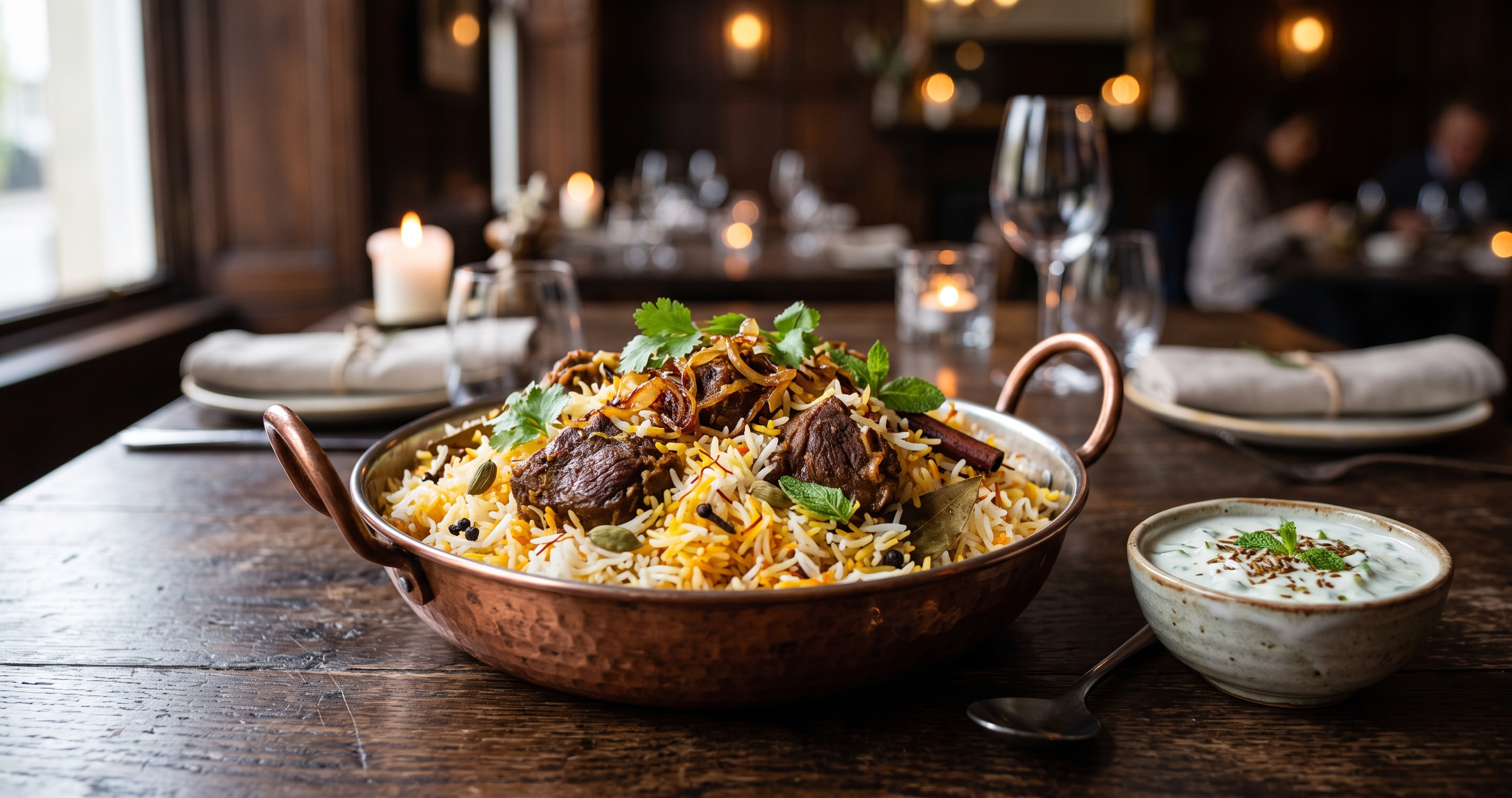
Dry meat in lamb biryani usually comes from a lean cut, a short marinade or meat that went under the rice undercooked or overcooked. Broken rice comes from unwashed or over-soaked grains, a rolling boil, overcooking before layering and stirring during dum. Use shoulder, parboil rice to about 70 per cent, seal the pot and never stir.
Why is biryani so easy to get wrong?
Because lamb biryani asks two ingredients with opposite needs to finish at the same moment. Lamb wants long, gentle, moist heat so its collagen melts. Basmati wants short, precise cooking so each grain stays long and separate. A biryani is the negotiation between them, carried out in a sealed pot you cannot see into.
In our kitchen, Chef Niaz’s cooking comes from Kolkata, where biryani has its own story. When Wajid Ali Shah, the last Nawab of Awadh, was exiled to Metiabruz in Kolkata in 1856, his cooks brought Lucknow’s refined, delicately spiced dum style with them. The Kolkata biryani that grew from it is lighter on chilli, perfumed, and famous for a potato in the pot. The popular story says potatoes were added because times were hard; others argue they were a prized novelty at the time. Historians still debate it, and we enjoy the potato either way.
That lineage shapes how we think about the dish: gentle heat, fragrant rice and meat that falls apart. Here is what goes wrong, and how to stop it.
Which mistakes make the lamb dry?
Mistake 1: choosing a lean cut. Leg looks neat but has little connective tissue, so it tightens and dries during a long cook. Shoulder and neck are threaded with collagen, which turns into gelatine somewhere above about 70°C given enough time. That gelatine is what makes meat feel moist even when it has lost juice. Use bone-in shoulder cut into 5cm pieces. The bone adds flavour and buffers the heat.
Mistake 2: a short or harsh marinade. Yoghurt tenderises gently. Its mild lactic acid and calcium help loosen muscle proteins on the surface without turning them mushy, unlike strong acids such as neat lemon juice, which can make the outside chalky. Marinate in yoghurt, ginger-garlic paste, salt and spices for at least four hours, ideally overnight in the fridge.
Mistake 3: misjudging the meat before layering. There are two main methods. In a kacchi biryani, raw marinated meat goes under raw-ish rice and everything cooks together; it needs small pieces, a heavy pot and a long, careful dum, and it is unforgiving. In a pakki biryani, the meat is cooked first as a rich curry and then layered. For home cooks we recommend pakki. Simmer the lamb until it is about 85 to 90 per cent tender, usually 60 to 80 minutes for shoulder. It should yield to a knife with slight resistance. Cook it fully at this stage and it dries out during dum. Undercook it and it stays chewy.
Mistake 4: too little liquid in the meat layer. You want a thick, glossy gravy, roughly enough to come a third of the way up the meat. That liquid turns to steam during dum and keeps the lamb moist. Bone-dry meat at the bottom of the pot will scorch.
Which mistakes break the rice?
Mistake 5: skipping the wash. Surface starch turns to glue in the water and makes grains stick and tear when you lift them. Rinse in cold water, swirling gently with your fingertips, four or five times until it runs nearly clear.
Mistake 6: soaking too long, or not at all. A 20 to 30 minute soak lets the grain hydrate evenly so it cooks through without the outside bursting. Soak for hours and the grains become fragile and snap. Aged basmati, which is common in good shops, has a firmer structure and holds up better than new-crop rice.
Mistake 7: a violent boil and overcooking. Use plenty of water, at least 2.5 litres for 500g of rice, salted until it tastes like mild seawater. Add whole spices such as bay, green cardamom, cloves and cinnamon. Lower the rice in, bring back to a gentle boil and start checking at four minutes. You want it about 70 per cent cooked: a grain should snap with a firm white core when pressed. A fierce boil throws grains against each other and the pot.
Mistake 8: stirring. Drain the rice and spoon it over the meat in loose layers. Never press it down. Never stir once dum begins. When serving, slide a wide spoon down the side of the pot and lift.
How should the dum be done?
Dum is slow cooking in a sealed pot, and it is where a lamb biryani is won or lost: meat and rice finish together in their own steam.
- Layer: meat and gravy at the bottom, then rice, then a drizzle of ghee, saffron soaked in warm milk, fried onions, mint and coriander. Repeat if you have a deep pot.
- Seal: cover with foil and a tight lid, or seal the lid with a rope of dough.
- Start hot: 5 minutes on medium heat to build steam.
- Go low: move the pot onto a flat tava or heavy frying pan on the lowest heat (this stops the base burning) for 25 to 30 minutes. Or bake at 160°C for 30 to 35 minutes.
- Rest: leave it sealed, off the heat, for 10 minutes before opening.
| Problem | Most likely cause | Fix next time |
|---|---|---|
| Chewy lamb | Undercooked before layering | Simmer shoulder until 85 to 90 per cent tender |
| Stringy, dry lamb | Lean leg, or fully cooked before dum | Use shoulder; stop cooking a little earlier |
| Mushy rice | Rice over 70 per cent cooked before layering | Check from 4 minutes; drain sooner |
| Broken grains | Over-soaking, hard boil, stirring | 30-minute soak, gentle boil, fluff from the side |
| Burnt base | Too little gravy, direct high heat | Keep gravy; use a tava under the pot |
Is lamb biryani the same as pulao rice?
No, and confusing them causes many of the mistakes above. Pulao rice is cooked by absorption: rice, meat or vegetables, spices and a measured amount of liquid go into one pot and cook together until the liquid is gone. The flavour is even all the way through. Biryani is a layered dish in which the rice is parboiled separately in excess water, drained, and finished over a spiced meat layer, so you get grains in different shades and intensities. If you try to cook biryani rice by the absorption method you lose that contrast, and if you treat pulao like biryani the rice ends up underseasoned.
Where can you eat a properly made biryani nearby?
If you have typed Indian restaurant near me somewhere around Covent Garden and want to taste the Kolkata approach, Paro is at 21 Wellington Street, right beside the Lyceum Theatre. Chef Niaz builds his dishes on our house 48-spice mix, and the menu is tagged for halal, gluten-free, dairy-free and nut-free diners, among others. Ask the Paro team what biryani is on when you visit, and how it has been prepared that day.
People who plan evenings around a show often look up the best restaurants Covent Garden has before booking tickets. Being so close to the theatres means we serve plenty of pre-theatre and post-theatre guests, and lunch runs Wednesday to Sunday from midday. Among restaurants West End diners can reach on foot from the Strand, the Royal Opera House or Holborn, we are easy to find.
Key Takeaways
- Use bone-in lamb shoulder and marinate it in yoghurt for at least four hours.
- Cook the meat to about 85 to 90 per cent tender before layering, with a good layer of gravy.
- Wash basmati well, soak 20 to 30 minutes, and parboil to 70 per cent in heavily salted water.
- Seal the pot, cook on very low heat over a tava, and rest it before opening.
- Never stir; lift from the side.
Frequently Asked Questions
Why is my biryani rice sticky?
Usually because it was not rinsed enough, was boiled in too little water, or was cooked past 70 per cent before layering. Use plenty of water, rinse until it runs almost clear and drain early.
Can I use boneless lamb?
Yes, but choose boneless shoulder rather than leg. Shoulder has more fat and collagen, so it stays moist through the long cook. Reduce the simmering time slightly.
How long should lamb biryani rest?
About 10 minutes, sealed and off the heat. The steam settles and the grains firm up, so they are less likely to break when you serve.
What is the potato doing in Kolkata biryani?
It is a signature of the Kolkata style, which descends from the Awadhi cooking brought to the city in the nineteenth century. It soaks up the meat juices and spices. Why it was first added is still debated.
Final Thoughts
A good lamb biryani comes from respecting both ingredients: collagen-rich meat cooked slowly in a yoghurt marinade, and basmati handled gently from wash to plate. Fix those eight mistakes and you will get tender lamb and long, separate grains. If you would rather we did the slow part, come and eat at Paro on Wellington Street.