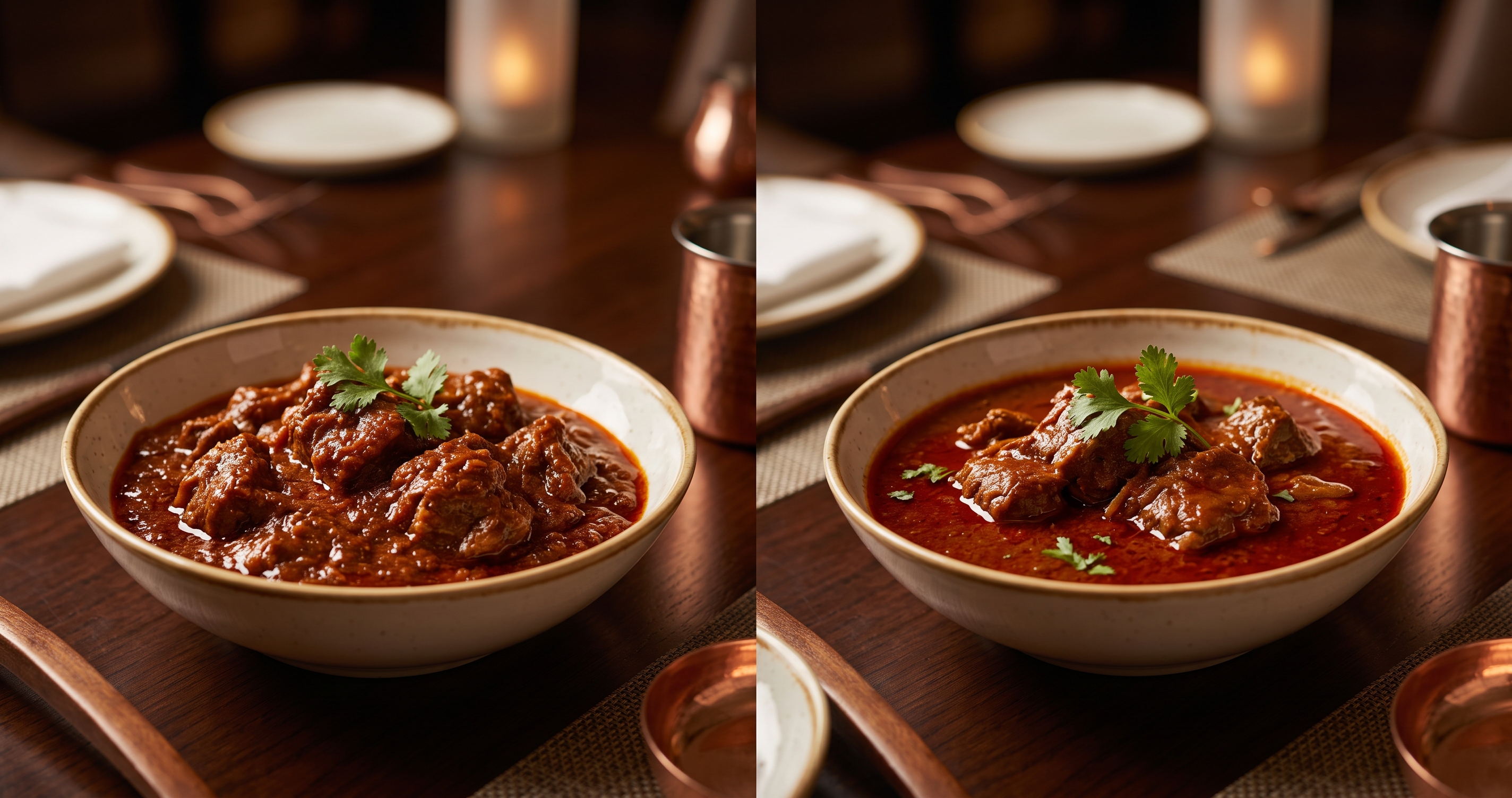
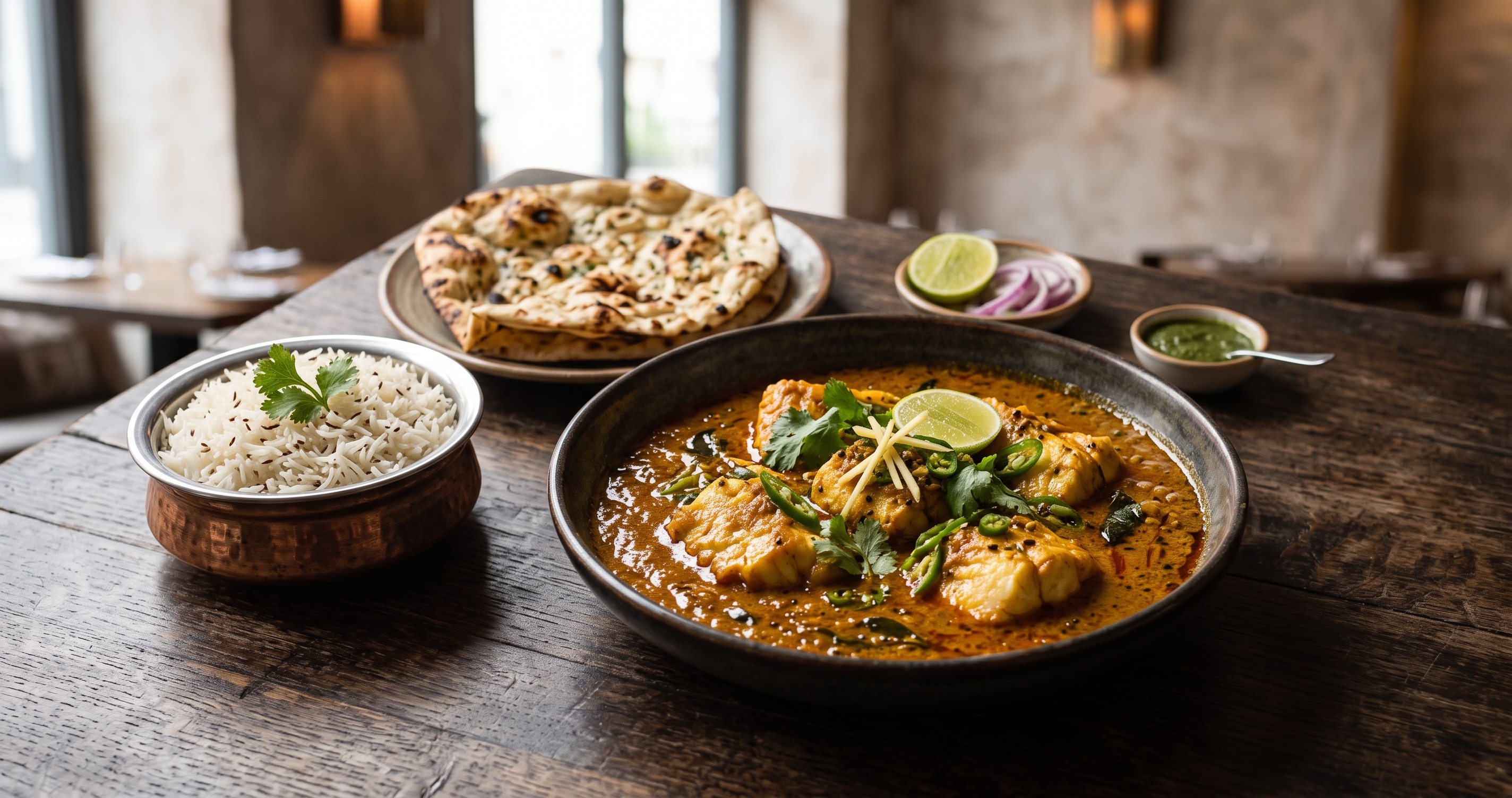
An authentic coastal Indian fish curry rests on three things: turmeric and salt rubbed into the fish, a regional souring agent (kokum, tamarind or Malabar tamarind), and a cooking fat that carries the spices, usually coconut oil in the south and west or mustard oil in Bengal. Chillies, mustard seed and curry leaves then set the regional accent.
Why Does Every Coastal Fish Curry Start With Turmeric And Salt?
From Kolkata down to Kochi, the first job is the same. The fish is cut, washed and rubbed with ground turmeric and salt, then left for 10 to 15 minutes.
This is not decoration. Salt draws a little moisture to the surface and starts to firm the outer proteins, so the pieces hold together in a simmering sauce. Turmeric brings an earthy, slightly bitter note that takes the edge off any fishy smell, and its colour tells the cook at a glance when a shallow fry has sealed the surface. In our kitchen we fry turmeric-rubbed pieces for about a minute a side in hot oil before they ever meet the gravy. They are not cooked through. The point is a light skin that stops delicate flesh from breaking up.
A practical rule we teach every new cook: use roughly half a teaspoon of turmeric and three quarters of a teaspoon of salt per 500g of fish. More turmeric turns the dish dusty and bitter.
Which Souring Agents Give Coastal Curries Their Tang?
Sourness is the backbone of most coastal fish dishes, and each stretch of coastline reaches for something different.
- Kokum (Garcinia indica) is a dried purple fruit rind used along the Konkan coast, in Goa, Malvan and coastal Karnataka. It gives a soft, fruity sourness and a pinkish tint. Three or four pieces, soaked in warm water for 15 minutes, are enough for a family pot.
- Kudampuli, or Malabar tamarind (Garcinia gummi-gutta), is smoked and dried until black. It belongs to Kerala, where it gives the red meen curry its deep, almost smoky sharpness.
- Tamarind pulp is used widely in Tamil Nadu, Andhra Pradesh and Mangalore. It is sweeter and rounder than either garcinia.
- Tomato and green mango appear in season, and Bengal often leans on neither, using the sharpness of mustard instead.
Why does acid matter beyond flavour? It firms fish proteins slightly, which helps pieces keep their shape, and it cuts through the richness of coconut or mustard oil. A fish curry without enough sourness tastes flat and heavy no matter how many spices go in.
How Do Bengali Kitchens Use Mustard?
Chef Niaz’s cooking is grounded in Kolkata and West Bengal, so this is the coastline closest to our hearts. Bengal is a river and estuary country as much as the sea coast, and fish is part of daily life.
Two mustard ingredients matter. The first is mustard oil, heated until it just begins to smoke and then allowed to cool slightly. That heat tames its raw pungency and leaves a nutty, gently sharp oil that fish loves. The second is mustard paste, made by soaking black or yellow mustard seeds for 20 to 30 minutes and grinding them with a pinch of salt and a green chilli.
Here is the chemistry. When mustard seeds are crushed and wet, an enzyme called myrosinase converts compounds in the seed into allyl isothiocyanate, the same nose-tingling heat found in wasabi. Grind too long, or let the paste sit warm, and it turns bitter. Boil it hard and the heat collapses. So the paste goes in late, and the pot only ever simmers gently afterwards.
The other Bengali signature is panch phoron, a whole-seed mix of cumin, fennel, fenugreek, nigella and black mustard. A teaspoon fried in mustard oil until it crackles perfumes a light macher jhol, the everyday thin fish stew of Bengal, in under 30 seconds.
What Spices Define The West And South Coast Styles?
Once you cross to the western and southern coasts, coconut takes over from mustard.
| Region | Cooking fat | Souring agent | Key spices | Typical texture |
|---|---|---|---|---|
| Bengal | Mustard oil | Mustard sharpness, sometimes tomato | Panch phoron, mustard paste, turmeric, green chilli | Thin jhol or thick mustard gravy |
| Goa | Coconut oil or vegetable oil | Kokum or tamarind, sometimes vinegar | Dried Kashmiri chilli, coriander seed, cumin, garlic | Coconut-rich, brick red |
| Konkan / Malvan | Coconut oil | Kokum | Malvani masala, coriander, black pepper, coconut | Medium, coconut-based |
| Kerala | Coconut oil | Kudampuli | Kashmiri chilli, fenugreek, curry leaves, shallots | Thick, clay-pot red, no coconut milk in many versions |
| Mangalore | Coconut oil | Tamarind | Byadgi chilli, coriander, fenugreek, coconut | Smooth coconut gravy |
A few details make the difference. Kashmiri and Byadgi chillies give strong colour with moderate heat, which is why coastal curries look fiery but often are not. Fenugreek seeds are used sparingly, perhaps a quarter of a teaspoon, because they turn bitter fast. Curry leaves go into hot coconut oil at the start and sometimes again as a final tempering.
How Do You Keep The Fish From Breaking Up?
A great masala cannot rescue overcooked fish.
- Choose firm fish for long simmers: kingfish, monkfish, hake or pollock hold well. Save sea bass and plaice for quick, thin sauces.
- Marinate in turmeric and salt for 10 to 15 minutes, not hours.
- Sear briefly, or slide raw pieces into the gravy only once the sauce is fully cooked and seasoned.
- Simmer for 6 to 10 minutes depending on thickness, until the flesh is just opaque at the centre.
- Shake the pan rather than stirring with a spoon.
- If using coconut milk, add it in the final minutes and keep the heat low. Hard boiling splits coconut milk into oil and curds.
Where Can You Taste Coastal Fish Cooking In Covent Garden?
People often search for an indian restaurant near me when what they really want is a particular style of cooking. If that style is Bengali fish, ask whether the kitchen has a fish dish built on mustard or a jhol, rather than a generic tomato-and-onion gravy.
At Paro on Wellington Street, our dishes are built on a house 48-spice mix, and Chef Niaz’s Kolkata roots shape how we handle fish: mustard oil treated with care, souring kept bright, and fish added late. Our menu is tagged for halal, gluten-free, dairy-free and nut-free diners, which helps because coastal recipes vary so much in whether they use coconut, dairy or nuts. Ask the team which dishes suit your needs that day.
Many guests come in before a show at the Lyceum next door, so timing matters. A properly made fish curry cooks quickly, which makes it a sensible pre-theatre choice. If you are comparing the best restaurants covent garden has for regional Indian cooking, the questions above (which fat, which souring agent, when the fish went in) will tell you a lot. Plenty of visitors also plan the evening around covent garden drinks on the Piazza first, then come in for a lighter, sharper meal than a heavy cream curry.
And if you have been hunting for an indian afternoon tea london experience, think about where fish fits in. Small fried fish pieces, Bengali-style fish chops and cutlets were long-standing tea-time snacks in Kolkata, a reminder that the city’s fish culture extends well beyond lunch and dinner.
Frequently Asked Questions
What is the most important spice in coastal Indian fish cooking?
Turmeric is the one spice almost every coastal region shares, because it is rubbed onto the fish before cooking. The regional character, though, comes from the souring agent and the cooking fat, so kokum, kudampuli, tamarind or mustard oil matter just as much.
Why does my mustard fish taste bitter?
Bitterness usually comes from grinding mustard seeds too long or boiling the paste hard. Soak the seeds first, grind briefly with salt and a green chilli, and add the paste near the end over gentle heat.
Is kokum the same as tamarind?
No. Kokum is the dried rind of Garcinia indica and gives a softer, fruitier sourness with a pink tint. Tamarind comes from a different plant and is sweeter, darker and more rounded.
Which fish works best for Indian curry at home?
Firm white fish such as kingfish, monkfish, hake or pollock hold their shape in a simmering gravy. Delicate fish like sea bass suit quicker, thinner sauces where it cooks for only a few minutes.
Are coastal Indian fish curries always very hot?
Not usually. Many use Kashmiri or Byadgi chillies, which give deep red colour with moderate heat, and the sourness and coconut balance the chilli further.
Final Thoughts
A good fish curry is a lesson in restraint: a few well-chosen spices, a clear sour note, the right fat and fish that is barely cooked. Learn those four things and you can move from Bengal’s mustard to Kerala’s kudampuli with confidence. When you want to taste how a Kolkata-rooted kitchen handles it, come and see us at Paro in Covent Garden, before the curtain goes up or after it comes down.