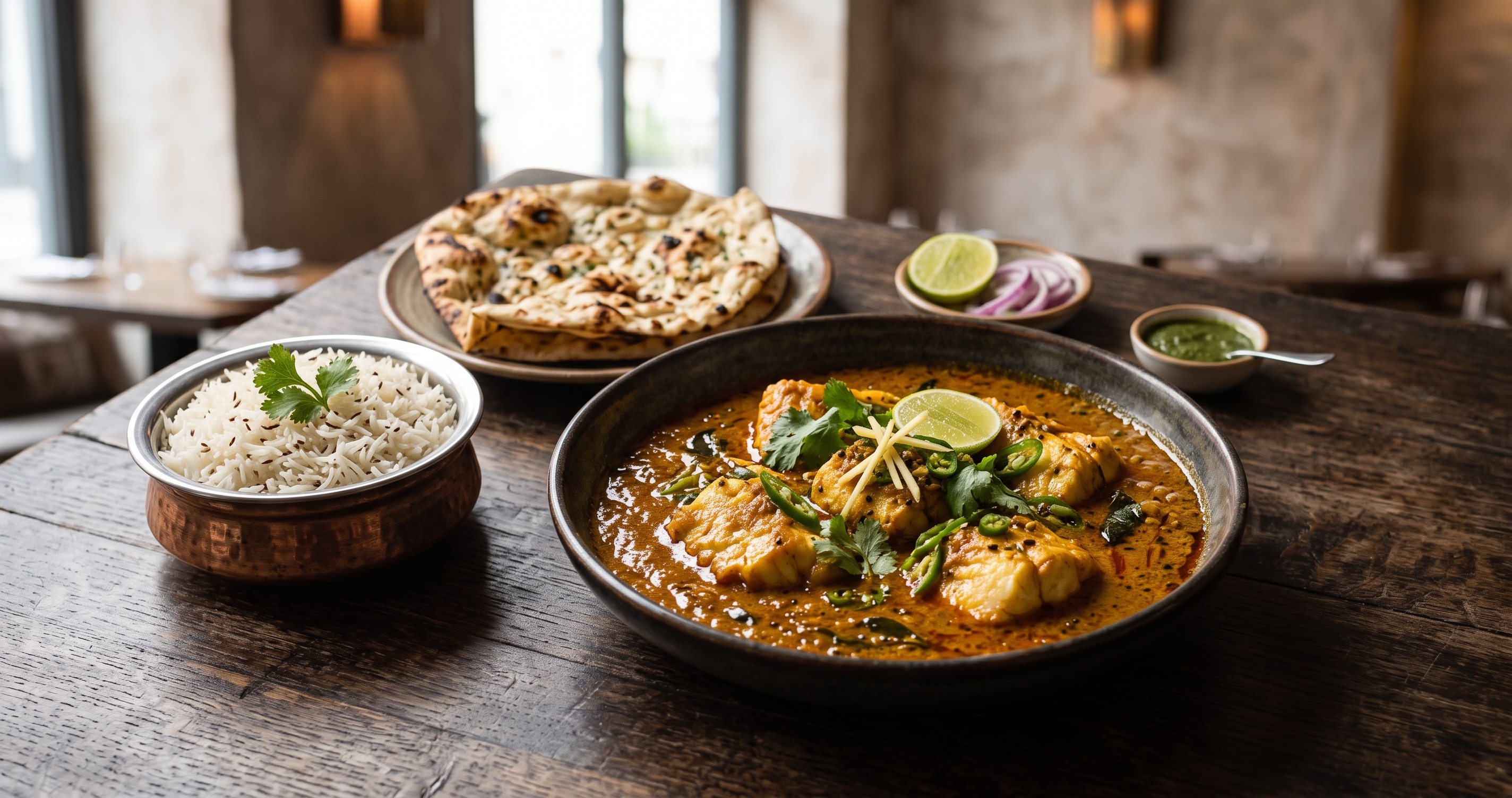
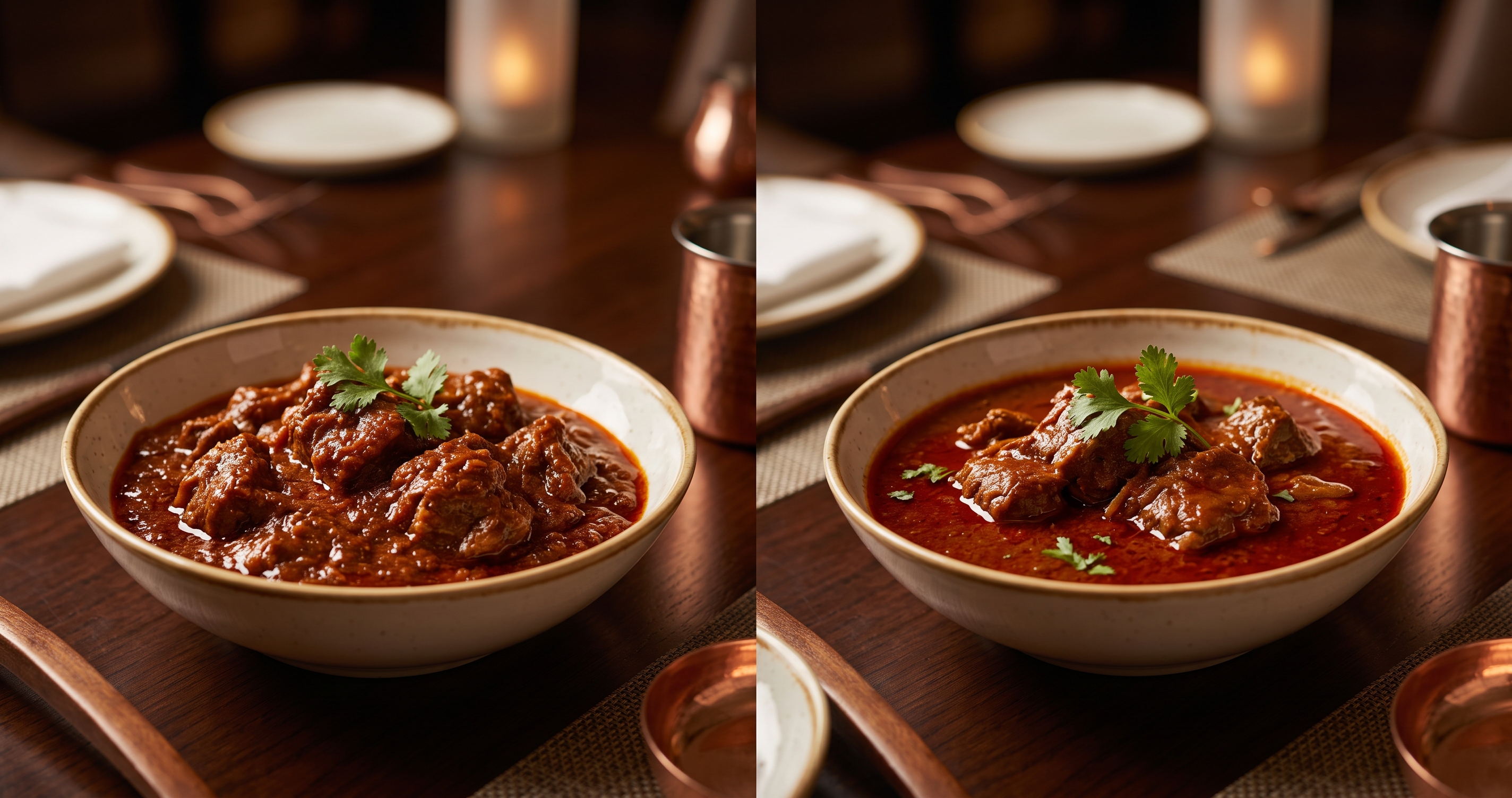
In the bhuna vs rogan josh question, the short answer is this: a bhuna is a cooking technique that produces a thick, dry-ish masala clinging to the meat, while rogan josh is a specific Kashmiri lamb dish with a looser, glossy red gravy. Both are usually medium heat, but rogan josh tastes more aromatic and bhuna more deeply roasted.
Is bhuna a dish or a cooking method?
Bhuna is a method first. The word comes from bhunna, to fry or roast, and it describes what happens in the pan: spices, onions and meat are cooked in oil over steady heat, stirred and scraped, with only small splashes of water added whenever the base starts to catch. The water evaporates, the masala fries again, and each round deepens the colour and flavour.
What is happening chemically is browning. Onion sugars caramelise, and the amino acids and sugars in meat and spices go through Maillard reactions, which only happen properly once the water has gone and the surface temperature climbs well above boiling. That is why a bhuna cannot be rushed with a lid on. Steam keeps the pan near 100°C, and nothing browns.
In our kitchen, the sign that a bhuna base is ready is visual: the oil separates and pools at the edges of the masala. Cooks across India and Bangladesh call this the point where the masala “leaves oil”. Before it, the spices taste raw and dusty. After it, they taste round.
Because bhuna is a method, you will see bhuna chicken, bhuna prawns, bhuna lamb and bhuna vegetables. In Bengali and Bangladeshi home cooking, bhuna dishes are everyday food, which is part of why the style sits so naturally in Chef Niaz’s Kolkata-rooted cooking.
Where Does Rogan Josh Come From?
Rogan josh is a dish from Kashmir, closely tied to Persian and Mughal influence in the valley. The name is usually explained as Persian: rogan meaning oil or clarified fat, and josh meaning heat, boiling or passion. Some writers read it as “red juice”, from a different sense of rogan as red. Food historians do not fully agree, so treat any single confident translation with caution.
There are two main Kashmiri traditions, and they differ in a way that surprises many diners.
- Kashmiri Pandit rogan josh uses no onion and no garlic. It gets its depth from asafoetida, yoghurt, ground fennel, dried ginger powder and Kashmiri chilli.
- Kashmiri Muslim rogan josh, part of the wazwan feast tradition, uses onion or shallot and often adds colour from maval (dried cockscomb flower) or ratan jot (alkanet root).
The rogan josh most people know from British curry houses is a third version again, usually built on an onion and tomato base with a strong red colour. It is a fair dish in its own right, just not what a cook in Srinagar would recognise.
Which Is Hotter, Bhuna Or Rogan Josh?
Neither is meant to be very hot. The bigger difference is the kind of heat.
Rogan josh depends on Kashmiri chilli, which gives a deep red colour with gentle heat. Fennel and dried ginger give it a warm, sweet-spicy lift rather than a burn. Bhuna heat depends on the cook. Because the masala is reduced so hard, any chilli in it becomes concentrated, and a bhuna can taste hotter per mouthful even with the same amount of chilli.
Bhuna Vs Rogan Josh: How Do Texture And Flavour Compare?
Here is the bhuna vs rogan josh comparison we give guests who ask at the table.
| Bhuna | Rogan josh | |
|---|---|---|
| What it is | A cooking technique | A named Kashmiri dish |
| Usual protein | Any: chicken, lamb, prawn, vegetables | Traditionally lamb or mutton |
| Sauce | Thick, reduced, clings to the meat | Looser gravy with a fat layer on top |
| Key flavour | Roasted onion, browned spices, savoury depth | Fennel, dried ginger, Kashmiri chilli, yoghurt |
| Heat | Medium, can concentrate | Mild to medium |
| Colour | Dark brown to reddish brown | Bright, deep red |
| Best with | Paratha or roti for scooping | Plain rice to soak up the gravy |
Texture is the clearest difference on the plate. A bhuna should coat the meat like a paste, with very little free sauce. A good rogan josh has a pool of red, aromatic oil on the surface. That fat is not a flaw. It is literally the rogan.
How Is Each One Cooked At Home?
A simple outline for each, enough for four people.
Lamb bhuna
- Heat 4 tbsp oil. Fry 2 finely sliced onions over medium heat for 15 to 20 minutes until deep golden.
- Add 1 tbsp ginger-garlic paste and cook for 1 minute.
- Add 1 tsp turmeric, 2 tsp ground coriander, 1 tsp ground cumin and 1 tsp chilli powder with a splash of water. Fry until the oil separates, about 5 minutes.
- Add 800g diced lamb shoulder and 1 tsp salt. Fry for 10 minutes, scraping, adding 2 tbsp water whenever it catches.
- Add 2 chopped tomatoes, cover loosely and cook on low for 60 to 75 minutes, stirring often. Uncover for the last 10 minutes to reduce until the masala clings.
Pandit-style rogan josh
- Heat 4 tbsp mustard oil or ghee. Add 2 bay leaves, 4 green cardamom, 4 cloves and a pinch of asafoetida.
- Brown 800g bone-in lamb for 8 to 10 minutes.
- Whisk 200g full-fat yoghurt with 2 tsp Kashmiri chilli powder. Take the pan off the heat, stir it in, then return to low heat so it does not split.
- Add 2 tsp ground fennel, 1 tsp dried ginger powder and 1 tsp salt. Add 300ml hot water.
- Simmer for 75 to 90 minutes until tender, finishing with a pinch of garam masala.
Taking the pan off the heat before adding yoghurt matters. Hot fat and sudden heat make yoghurt proteins clump. Full-fat yoghurt, whisked smooth and added off the heat, stays silky.
Which Should You Order, And Where?
Choose bhuna if you like savoury, concentrated flavour and want to eat with bread. Choose rogan josh if you prefer aroma, a gentler warmth and something to spoon over rice. Hungry and undecided? Order one of each and share. That is how we eat in our own kitchen.
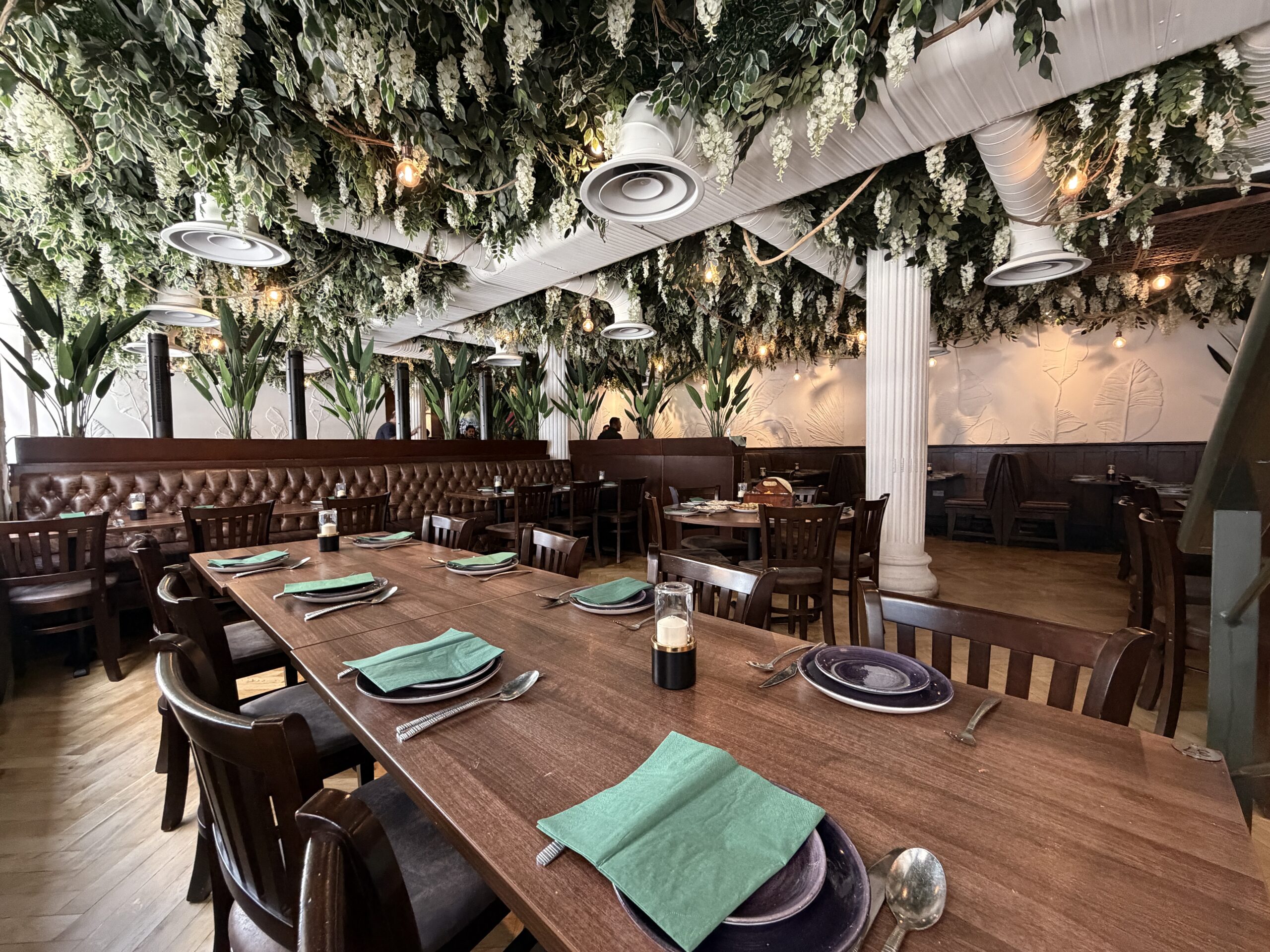
Among indian restaurants london visitors look up before a night out, menus vary widely in how they label these dishes, so it is worth asking the server how the kitchen makes them. At Paro, an Indian restaurant covent garden theatregoers know for its spot beside the Lyceum, our cooking starts from a house 48-spice mix, and the menu is tagged for halal, gluten-free and dairy-free diners, which matters with rogan josh because traditional versions lean on yoghurt. Ask the team which dishes fit your needs.
If you are comparing restaurants central london and restaurants west end for a pre-theatre table, both of these dishes reheat and hold well, which is one reason a good kitchen can serve them quickly. Lunch at Paro runs Wednesday to Sunday from midday, so they can also work as a slower midday meal instead of a covent garden brunch. And if you want to taste several curries side by side without committing to one, a thali-style meal is the best way in. Diners searching for the best indian thali in london are often looking for exactly that comparison on a single tray.
Frequently Asked Questions
Is rogan josh spicier than bhuna?
Usually not. Rogan josh uses Kashmiri chilli, which is more about colour than heat, while a bhuna’s reduced masala can concentrate whatever chilli is in it.
Does rogan josh contain tomatoes?
Traditional Kashmiri recipes generally do not. The red colour comes from Kashmiri chilli and sometimes cockscomb flower or alkanet root, while many British restaurant versions add tomato.
Can bhuna be made with chicken or vegetables?
Yes. Bhuna describes the method of frying and reducing the masala, so it works with chicken, prawns, paneer and vegetables as well as lamb.
Why does rogan josh have oil on top?
The layer of red fat is part of the dish and reflects the meaning of rogan, often translated as oil or fat. It carries the dissolved colour and aroma of the Kashmiri chilli and whole spices.
Which is better for someone new to Indian food?
Rogan josh is often the gentler start, with mild heat and a fragrant gravy for rice. Bhuna suits diners who enjoy stronger, roasted, savoury flavours.
Final Thoughts
The bhuna vs rogan josh choice comes down to texture and mood: roasted and clinging, or fragrant and saucy. Both reward patient cooking, and both tell you a lot about a kitchen’s skill. Come and taste the difference at Paro in Covent Garden, whether you are heading to the Lyceum next door or simply settling in for a long lunch.