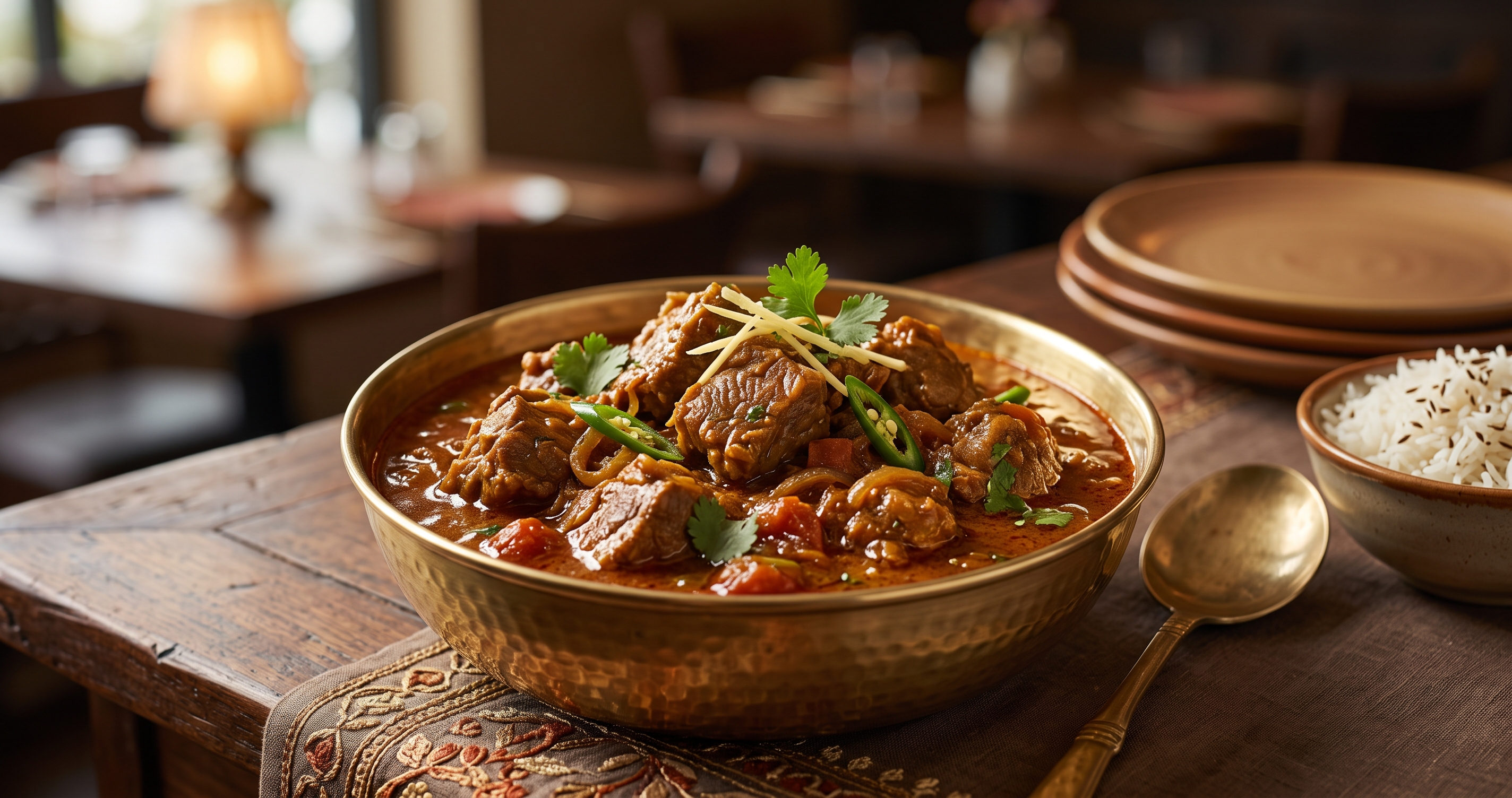
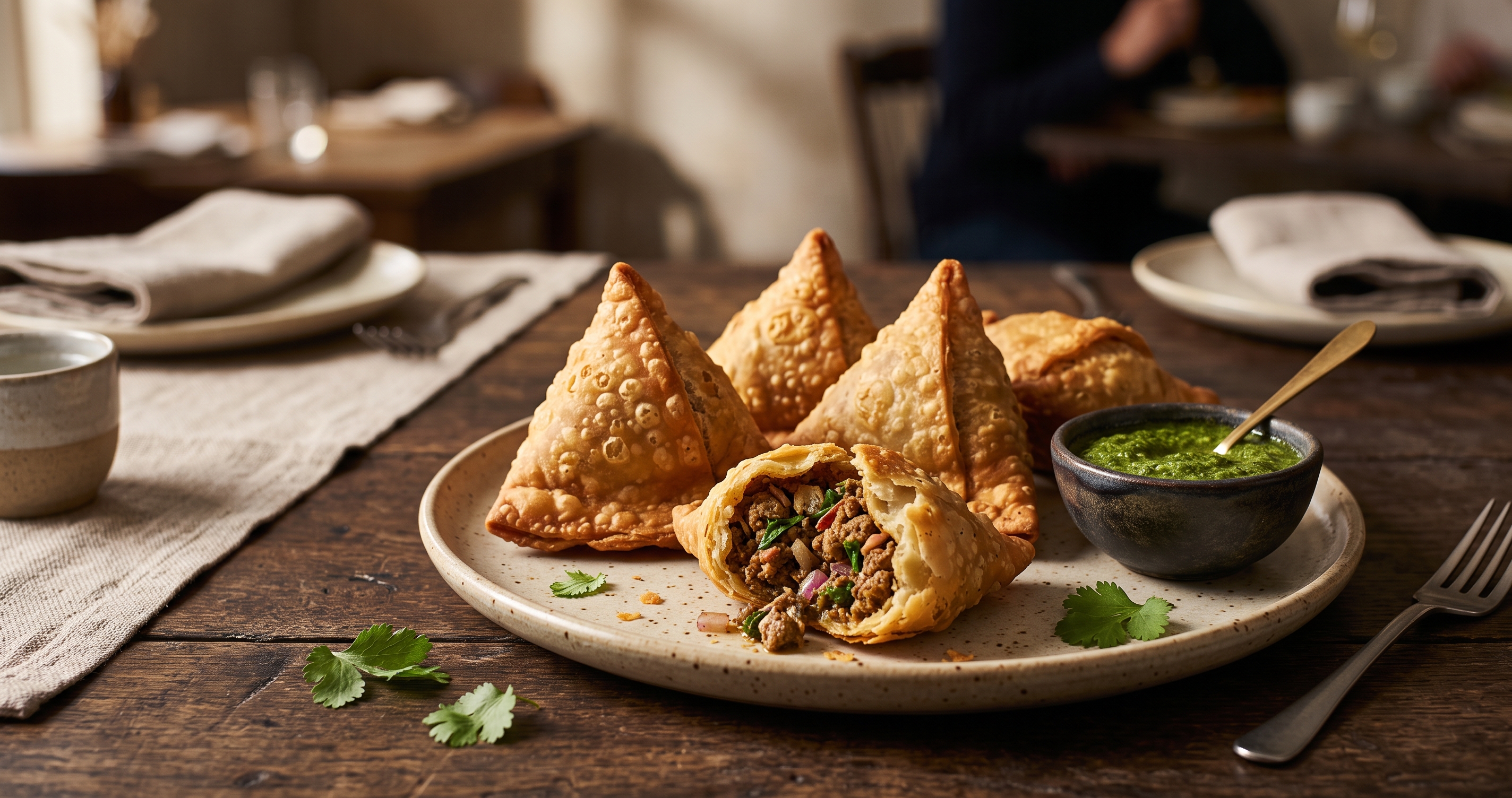
The secret to an authentic lamb samosa is a keema filling cooked until almost completely dry, then cooled before it goes anywhere near the pastry. Brown the mince hard, season it with whole cumin, ginger, garlic, green chilli and garam masala, finish with lemon and fresh coriander, and fry the samosas slowly at around 150 to 160°C.
That is the whole method in a sentence. The detail below is where most home batches go wrong, so we have written it the way we would explain it to a new cook on their first prep shift.
Why does the filling matter more than the pastry?
Because moisture is the enemy. A wet filling steams inside the pastry as it fries, softening it from the inside and sometimes splitting the seams so oil rushes in. The result is a greasy, limp samosa no matter how good the dough was.
Proper keema for samosas is drier than keema you would eat with rice. You are aiming for mince that is tender, deeply browned and loose, with every grain coated in spice but no liquid pooling in the pan. If you press a spoonful against the side of the bowl, nothing should run out.
The second reason is flavour. Pastry is a vehicle. The filling has to be seasoned more boldly than you might expect, because the pastry around it mutes everything slightly.
What goes into a proper keema filling?
This makes enough filling for about 20 samosas.
For the filling: 500 g lamb mince (around 20 per cent fat is ideal); 2 tbsp vegetable oil; 1 tsp cumin seeds; 1 medium onion, very finely chopped; 1 tbsp ginger-garlic paste; 2 green chillies, finely chopped; 1 tsp ground coriander; ½ tsp ground turmeric; 1 tsp Kashmiri chilli powder; 1 tsp salt; 100 g frozen peas; 1 tsp garam masala; a large handful of fresh coriander, chopped; juice of half a lemon.
- Bloom the cumin. Heat the oil in a wide frying pan over medium-high heat. Add cumin seeds and let them sizzle for 20 to 30 seconds until they darken a shade and smell toasty.
- Soften the onion. Add the onion and cook for 8 to 10 minutes until soft and lightly golden. Small, even pieces matter here: large chunks hold water and push the samosa out of shape.
- Aromatics. Add the ginger-garlic paste and green chilli. Cook for 1 to 2 minutes, stirring, until the raw smell disappears.
- Brown the mince. Turn the heat up, add the lamb and break it up with a wooden spoon. Leave it undisturbed for a minute at a time so it sears rather than stews. This browning (the Maillard reaction) creates the savoury depth that defines good keema. Allow 8 to 10 minutes.
- Ground spices. Add coriander, turmeric, chilli powder and salt. Stir for 2 minutes so the spices fry in the lamb fat.
- Peas. Add the peas and cook for 3 to 4 minutes.
- Dry it out. Keep cooking, stirring often, until all liquid has evaporated and the fat begins to separate. This can take another 5 to 10 minutes. Be patient.
- Finish. Off the heat, stir in garam masala, fresh coriander and lemon juice. Taste. It should be slightly over-seasoned on its own.
- Cool completely. Spread it on a tray and let it reach room temperature, or chill it. Warm filling softens the pastry and makes sealing difficult.
How do you make samosa pastry that blisters and stays crisp?
Samosa pastry is not puff and not shortcrust. It is a firm, lean dough enriched with fat that is rubbed in, which is what gives the crust its short, flaky crunch.
For the pastry (about 20 samosas): 250 g plain flour; ½ tsp carom seeds (ajwain); ½ tsp salt; 60 ml vegetable oil or melted ghee; 90 to 100 ml cold water.
- Mix the flour, ajwain and salt. Crush the ajwain between your palms first to release its thyme-like aroma.
- Add the oil and rub it into the flour with your fingertips for 3 to 4 minutes. It is ready when a handful squeezed in your fist holds its shape. This step, called moyan in Hindi, coats the flour particles in fat and limits gluten development, which keeps the crust crisp rather than chewy.
- Add water a little at a time to form a stiff, slightly rough dough. Do not knead it smooth. Over-kneading builds gluten and gives you a tough, bready shell.
- Cover and rest for 30 minutes.
How do you shape and fry a lamb samosa?
- Divide the dough into 10 balls. Roll each into an oval roughly 15 to 18 cm long and 2 mm thick. Cut in half across the middle.
- Brush water along the straight edge. Fold into a cone, overlapping the wet edge by about 1 cm, and press firmly to seal.
- Fill with about 1½ tablespoons of cooled keema. Do not overfill; you need room to close it.
- Brush the open top edge with water, pinch it shut and press out any air pockets. Trapped air expands in the oil and can burst the seal.
- Fry low and slow. Heat oil to 150 to 160°C. Fry in small batches for 12 to 15 minutes, turning occasionally, until deep golden and covered in tiny blisters.
Why so low? At high temperatures the outside sets and browns before the inner layers cook, leaving a pale, doughy interior and big air bubbles under the surface. Gentle heat lets moisture escape steadily, which is what creates that fine, blistered texture.
| Problem | Likely cause | Fix |
|---|---|---|
| Soggy or greasy samosa | Wet filling, or oil too cool | Dry the keema fully; check oil reaches 150°C |
| Big bubbles on the pastry | Oil too hot, or dough too soft | Fry at 150 to 160°C; use a stiffer dough |
| Pastry tough and chewy | Over-kneaded dough or too little fat | Rub fat in properly; mix, do not knead |
| Seams burst open | Trapped air, overfilling, poor seal | Press air out, fill less, seal with water |
Where does the samosa come from?
The samosa’s ancestors came from Central Asia and the Middle East, where filled pastries called sanbusak or sambusa were eaten for centuries. They reached India with traders and the courts of the Delhi Sultanate. The fourteenth-century traveller Ibn Battuta described a meal at the Sultan’s court that included small pastries filled with minced meat, nuts and spices, a clear ancestor of today’s meat samosas.
In Bengal, where Chef Niaz’s cooking is rooted, the samosa is known as shingara. Bengali shingara are often filled with spiced potato and sometimes cauliflower in winter, but meat versions have a long place in Kolkata too.
Can you freeze or bake samosas?
- Freezing. Freeze shaped but unfried samosas on a tray, then bag them. Fry from frozen at 150°C, adding 3 to 4 minutes to the cooking time.
- Baking or air frying. Brush with oil and cook at 200°C for 18 to 20 minutes, turning halfway. They will be crisp but less blistered than fried.
- Reheating. A hot oven at 180°C for 8 to 10 minutes revives them far better than a microwave, which softens the pastry.
Frequently Asked Questions
What mince is best for samosas?
Lamb mince with around 20 per cent fat gives the best flavour and texture. Very lean mince turns dry and crumbly once cooked down.
Why do my samosas get bubbles on the surface?
The oil is usually too hot, or the dough is too soft. Fry at 150 to 160°C and make a stiff dough to get small, even blisters.
Can I use filo or spring roll pastry instead?
Yes. Spring roll wrappers give a thin, very crisp shell and are a popular shortcut. The texture is lighter and more brittle than a traditional homemade crust.
How long does keema filling keep?
Cooked and cooled keema keeps for up to two days in the fridge. You can also freeze it for up to three months and defrost overnight before filling.
What should I serve with lamb samosas?
Tamarind chutney, a fresh mint and coriander chutney, or a simple yoghurt dip all work well. The sourness or freshness cuts through the rich, fried pastry.
Final Thoughts
A homemade lamb samosa is a weekend project, but once you have the dry-keema and low-frying principles down, it is not difficult. It just rewards patience.
If you would rather leave the frying to someone else, come and see us. Paro is an Indian restaurant Covent Garden diners find at 21 Wellington Street, beside the Lyceum Theatre and a few minutes from anyone searching for a restaurant Strand side. Ask the team which small plates are on the day. We serve lunch Wednesday to Sunday from midday, plus pre- and post-theatre guests, and we would love to welcome you to a restaurant West End London theatregoers can rely on.