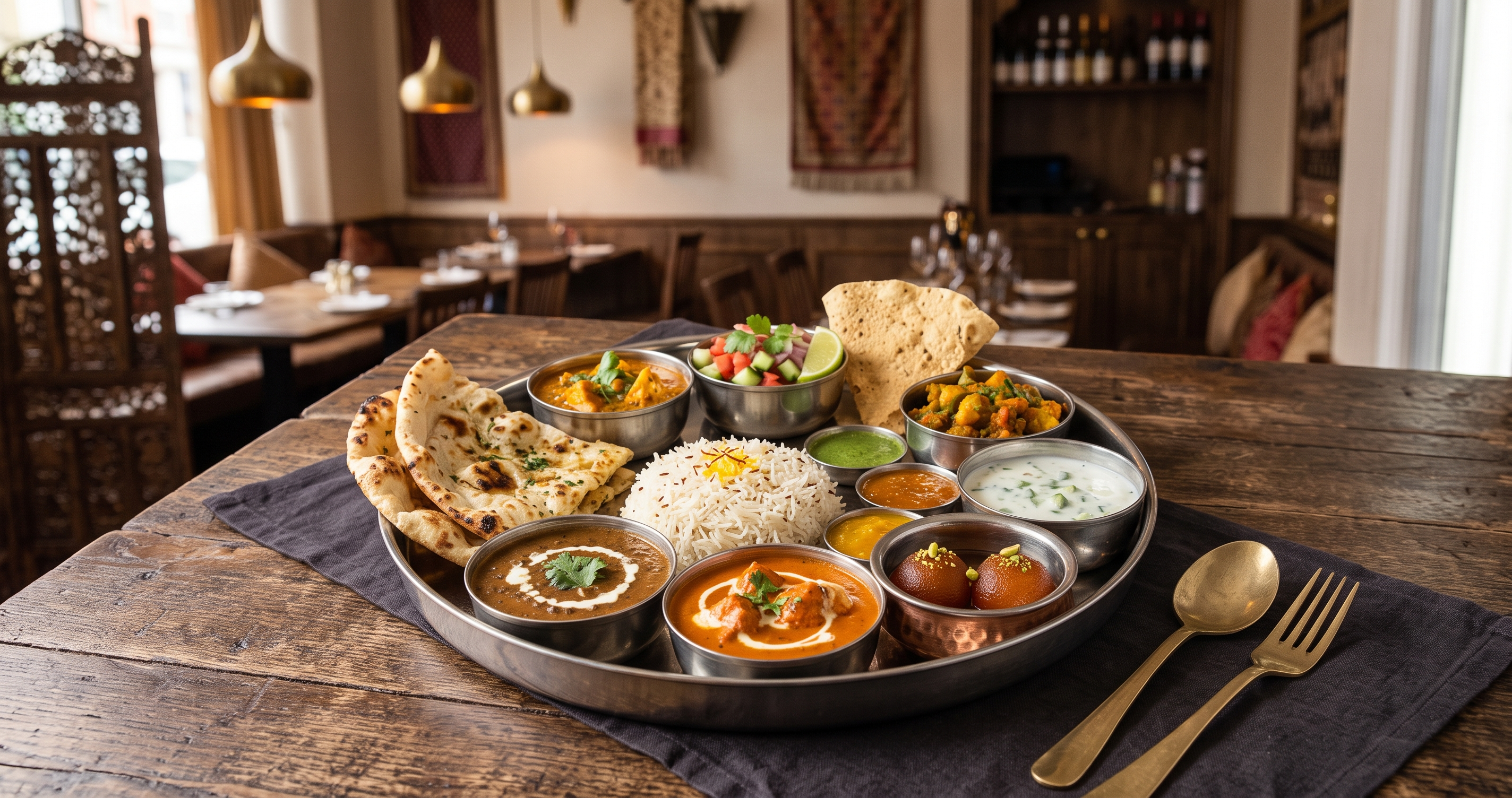

The simplest rule for enjoying the best curry Covent Garden has to offer: match texture to texture. Thin, soupy curries need rice to absorb them. Thick, clinging masalas need bread to scoop them. Rich, creamy dishes want something plain, and dry, spiced dishes can take a buttery, flaky bread. Get that right and every curry tastes better.
Why does pairing matter for the best curry Covent Garden kitchens serve?
In Indian homes, the curry is rarely the star on its own. It is one half of a pair. Rice or bread carries it, softens the heat and spreads the flavour across each mouthful.
The wrong match shows quickly. A light Bengali jhol eaten with naan runs off the bread and onto the plate. A thick bhuna served only with plain rice can feel dry and heavy. Neither dish has failed; the pairing has.
There is also a regional logic. Broadly, the wheat-growing north and north-west eat more bread, while the rice-growing east and south (Bengal, Odisha, Kerala, Tamil Nadu) eat rice with almost everything. Chef Niaz’s cooking is grounded in Kolkata’s rice-first table, and that shapes how we think about pairing at Paro.
Which breads suit which curries?
Each bread is built differently, and that build decides what it can carry.
- Naan is a leavened white-flour bread, often enriched with yoghurt, slapped onto the clay wall of a tandoor at 400°C or more. It puffs and blisters in about 90 seconds. Its soft, chewy body is ideal for thick, rich gravies like butter chicken or a creamy korma.
- Roti or chapati is unleavened whole-wheat (atta) dough cooked on a flat tawa. It is light and plain, so it suits everyday dals and dry vegetable dishes without competing.
- Tandoori roti is a whole-wheat bread baked in the tandoor. It is firmer than naan, with a smoky crust, and stands up to robust lamb dishes.
- Paratha is folded with ghee or oil between the layers, creating flaky sheets. It is rich, so pair it with drier dishes such as a bhuna or a dry vegetable fry, not a buttery gravy.
- Luchi is Bengal’s deep-fried puffed bread made from fine white flour. Classic partners are a spiced potato dish (aloo dum) or cholar dal, the sweet-leaning Bengal gram dal with coconut.
- Kulcha is a soft leavened bread, often stuffed, and pairs well with chickpea curries.
A tip from the pass: tear bread with your right hand, fold it into a small scoop and pinch the curry rather than dragging it. You get the right ratio of bread to sauce in each bite.
How should you choose rice for a curry?
Rice is not neutral. Its grain, aroma and how it is cooked all change the meal.
Basmati is the default for good reason. Long grains that lengthen as they cook stay separate and fluffy, and its popcorn-like aroma comes from a compound called 2-acetyl-1-pyrroline. Aged basmati (stored a year or more) cooks up firmer and less sticky, because aging changes the starch so it absorbs water more evenly.
At home, rinse basmati three times until the water runs nearly clear, soak for 20 to 30 minutes, then cook by absorption at about 1 part rice to 1.5 parts water, covered, on the lowest heat for 12 minutes. Rest it for 5 minutes before fluffing with a fork. Stirring while it cooks breaks the grains.
Gobindobhog is a short-grain, fragrant rice from West Bengal, used for festive dishes and khichuri. Jeera rice (basmati cooked with cumin fried in ghee) works with lentils and plainer curries. Pulao, cooked with whole spices and stock, is aromatic enough to accompany a simple, saucy dish but can clash with something already heavily spiced.
What pairs best with each style of curry?
Here is the pairing guide we use when guests ask, built around a short indian curries list of popular styles.
| Curry style | Texture | Best partner | Why |
|---|---|---|---|
| Butter chicken, korma | Rich, creamy | Plain naan or plain basmati | Something neutral to balance richness |
| Bhuna, jalfrezi | Thick, clinging | Paratha or tandoori roti | Bread scoops a dense masala |
| Rogan josh | Loose, oily, aromatic | Plain basmati | Rice absorbs the red, spiced fat |
| Madras, vindaloo | Hot, tangy | Plain rice, with raita on the side | Rice and yoghurt temper the heat |
| Dal tadka | Soupy to medium | Jeera rice or roti | Cumin echoes the tempering |
| Bengali fish jhol | Thin, light | Plain steamed rice | A thin gravy needs rice to soak it up |
| Chana masala | Medium, chunky | Kulcha or bhatura | A soft bread suits chickpeas |
| Biryani | Complete dish | Raita, no extra bread | It already contains rice and protein |
The table is a starting point, not a law, and the best curry Covent Garden diners order can still be eaten however they enjoy it. If you love garlic naan with everything, eat garlic naan with everything.
Can you make a madras curry at home to practise pairing?
Yes, and it is a useful test because the heat makes the pairing obvious. The madras is a British curry-house creation named after the old city of Madras (now Chennai), not a traditional Tamil dish, though it borrows southern flavours of chilli, tamarind and curry leaf.
A dependable madras curry recipe for four:
- Heat 3 tbsp oil. Add 1 tsp mustard seeds and, once they pop, 10 curry leaves.
- Fry 2 finely chopped onions for 12 to 15 minutes until golden.
- Add 1 tbsp ginger-garlic paste, cook for 1 minute, then 2 tsp ground coriander, 1 tsp ground cumin, 1 tsp turmeric and 2 to 3 tsp hot chilli powder with a splash of water. Fry until the oil separates.
- Add 3 chopped tomatoes and cook for 8 minutes.
- Add 700g diced chicken thigh (or 800g lamb shoulder) and 1 tsp salt. Stir to coat, then add 250ml water.
- Simmer for 25 minutes for chicken or 75 minutes for lamb.
- Stir in 1 tbsp tamarind paste and ½ tsp garam masala, and simmer 5 minutes more.
Serve it with plain basmati and a cooling raita. Try a forkful with naan instead and you will feel the difference: the bread soaks up less, so you get more heat per bite.
How do you order bread and rice for a table?
Ordering the best curry Covent Garden has for a group? A good rule is one portion of rice for every two people and one bread per person, then adjust. If the table has several thick dishes, lean towards bread. If it has saucy ones, add rice.
At Paro, our curries are built on a house 48-spice mix, so we think hard about letting them speak. That often means a plain basmati or a simple tandoor bread rather than heavily flavoured sides. Our menu is tagged for gluten-free and dairy-free diners too, which helps with breads, since naan often contains yoghurt and all wheat breads contain gluten. Rice is the easy answer for gluten-free guests; ask the team to confirm what suits you.
Whether you are looking for a pre-theatre restaurant covent garden visitors can reach on foot from the Piazza or a long Sunday lunch, it pays to think about the whole plate. Any indian restaurant covent garden worth its spices will happily advise on pairings if you ask.
Frequently Asked Questions
Should you eat curry with rice or naan?
It depends on the sauce. Thin, saucy curries suit rice, which absorbs the gravy, while thick, clinging curries suit naan or roti, which scoop the masala.
Which Indian bread is best for gluten-free diners?
Traditional wheat breads like naan, roti and paratha contain gluten. Plain rice is the safest partner, though some kitchens make breads from gram flour or other grains, so ask.
Why does restaurant basmati stay so fluffy?
Restaurants often use aged basmati, rinse away surface starch, soak the grains and cook by absorption without stirring. Each step helps the grains stay long and separate.
What is the difference between naan and roti?
Naan is a leavened white-flour bread, often with yoghurt, baked in a tandoor. Roti is an unleavened whole-wheat bread cooked on a flat griddle, so it is lighter and plainer.
Do you need bread or rice with biryani?
No. Biryani is a complete dish of rice and meat or vegetables, so it is usually served with raita or a light gravy rather than extra bread or rice.
Final Thoughts
The best curry Covent Garden can serve still needs the right partner to shine. Think about texture, richness and heat, and choose bread or rice to balance them. When you want to see how a Kolkata-rooted kitchen pairs its own dishes, come and eat with us at Paro, beside the Lyceum Theatre, and ask us what we would order.