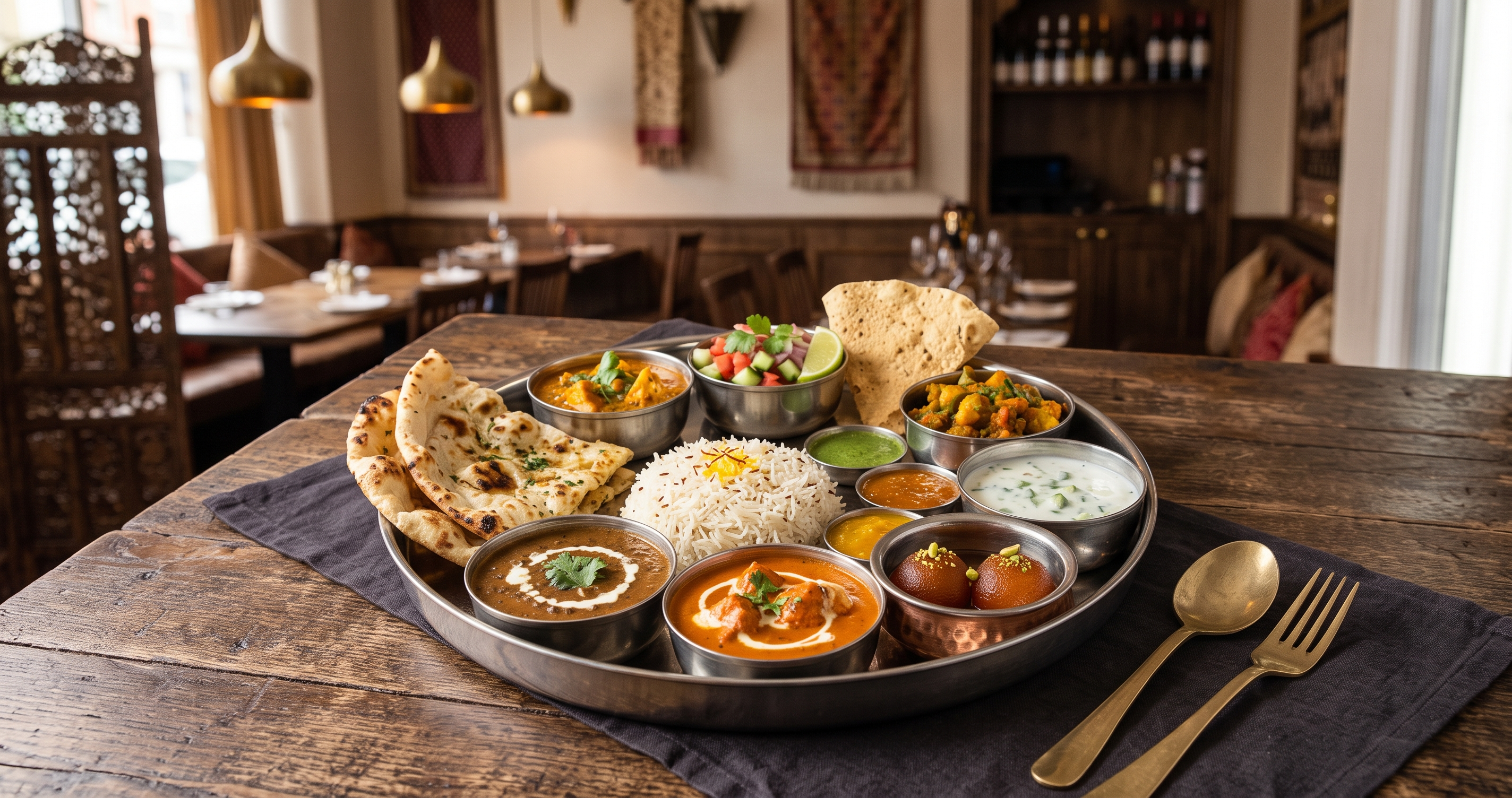
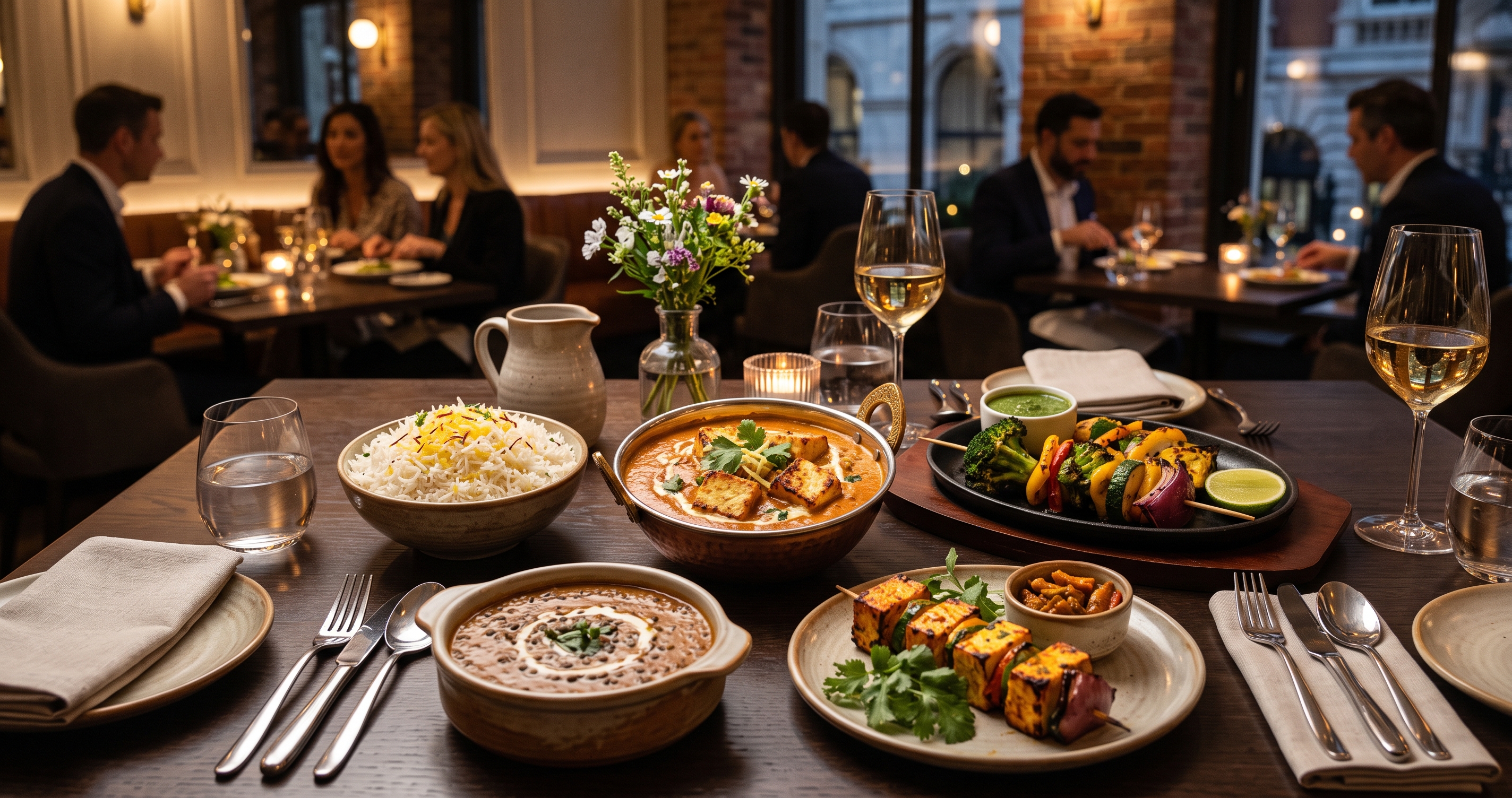
At a good gluten free Indian restaurant London diners can eat very well: rice dishes, dals, tandoori meats and vegetables, most curries and gram-flour fritters are naturally free of wheat. The things to avoid are breads like naan and roti, samosa pastry and anything thickened with flour. Always mention gluten, as hing and shared fryers can hide it.
We cook for gluten-free guests every day, and our menu is tagged for gluten-free, dairy-free, vegan, vegetarian, halal and nut-free diners. Here is how we would guide a friend through an Indian menu without wheat.
Why is Indian food so naturally gluten-free?
The answer lies in indian cuisine history and geography. India’s staple grain depends on where you are. The wheat belt of the north, Punjab especially, built its food around flatbreads: roti, paratha and the tandoor-baked naan that dominates British menus. But the rice-growing east and south, including Bengal, Kerala and Tamil Nadu, built theirs around rice and lentils.
Even in the north, the sauces themselves rarely rely on wheat. Indian curries are thickened by reducing onions and tomatoes, by grinding nuts, seeds or coconut, or by stirring in yoghurt. Flour-based roux, the backbone of so many European sauces, simply is not part of the tradition.
Our own kitchen leans east. Chef Niaz’s cooking is rooted in Kolkata and West Bengal, where a meal centres on rice, and his dishes are built on our house 48-spice mix rather than on flour-thickened gravies. That makes a Bengali-rooted kitchen a comfortable place to eat without gluten.
What can you safely order, and what should you avoid?
Here is the quick version we give guests at the table.
| Usually safe | Avoid | Always ask about |
|---|---|---|
| Plain basmati and pulao rice | Naan, roti, chapati, paratha | Asafoetida (hing) in dals and vegetables |
| Dals and lentil curries | Samosas and other pastry | Anything deep-fried in a shared fryer |
| Tandoori meats, fish, paneer and vegetables | Puri and bhatura (fried wheat breads) | Marinades with added flour |
| Most meat, fish and vegetable curries | Indo-Chinese dishes with soy sauce | Batters on pakoras |
| Gram-flour bhajis and pakoras | Beer-battered or breadcrumbed starters | Desserts made with semolina (suji) |
| Rice-and-lentil dosa | Kulcha and stuffed breads | Ready-made spice blends |
The hidden one most people miss is asafoetida. Hing is a dried plant resin, so pungent that it is almost always sold cut with flour to make it usable, and that flour is usually wheat. It goes into countless dals and vegetable dishes in tiny quantities. For someone with coeliac disease, those tiny quantities matter. A careful kitchen will use a gluten-free hing (cut with rice flour) or leave it out, and will tell you which.
Are onion bhajis gluten-free?
Traditionally, yes. Onion bhajis are made with gram flour (besan), which is ground from chickpeas and contains no gluten. Some restaurants add wheat flour to the batter for structure, so it is worth asking, and fryers shared with wheat-battered food can cross-contaminate.
Here is how we would make them at home, gluten-free from start to finish. Makes about 12.
- Thinly slice 2 large onions (about 350g) and toss with 1 tsp salt. Leave for 10 minutes. The salt draws water out of the onion, and that water becomes part of the batter.
- Add 120g gram flour, 2 tbsp rice flour, 1 tsp cumin seeds, ½ tsp turmeric, 1 tsp chilli powder, 1 finely chopped green chilli and a small handful of chopped coriander.
- Mix with your hands, adding cold water a tablespoon at a time (you will need roughly 60 to 80ml), until every strand of onion is coated in a thick, sticky batter. It should not be runny.
- Heat oil in a deep pan to 170°C. Drop in loose spoonfuls and fry for 4 to 5 minutes, turning once, until deep golden and crisp.
- Drain on kitchen paper and eat hot.
Why the rice flour? Gram flour alone can turn slightly soft as the bhaji cools. Rice flour has no gluten and fries to a glassy, brittle crunch, so it keeps the edges crisp for longer. And why 170°C rather than hotter? A bhaji is thick. Too hot and the outside burns before the onion in the middle softens.
Can you cook gluten-free madras at home?
You can, and it is a good way to understand why curries rarely need flour. This madras curry recipe serves four.
Ingredients: 700g boneless chicken thighs cut into 3cm pieces, 3 tbsp vegetable oil, 1 tsp black mustard seeds, 12 fresh curry leaves, 2 onions finely chopped, 1 tbsp grated ginger, 1 tbsp grated garlic, 2 tsp Kashmiri chilli powder, 1 tsp hot chilli powder, 2 tsp ground coriander, 1 tsp ground cumin, ½ tsp turmeric, a 400g tin of chopped tomatoes, 1 tbsp tamarind paste, 1 tsp salt, ½ tsp garam masala, 200ml water.
- Heat the oil over a medium-high heat. Add the mustard seeds and let them pop for about 30 seconds, then add the curry leaves for 10 seconds.
- Add the onions and cook for 12 to 15 minutes, stirring often, until deep golden brown. This is where the sauce gets its body and sweetness.
- Add the ginger and garlic and cook for 1 minute.
- Add the ground spices with a splash of water so they cook without scorching, about 1 minute.
- Add the tomatoes and salt. Cook for 8 to 10 minutes until the oil starts to separate at the edges.
- Add the chicken, stir to coat, and cook for 5 minutes. Pour in the water, cover and simmer gently for 20 minutes, until the chicken reaches 75°C in the centre.
- Stir in the tamarind and garam masala, simmer uncovered for 5 minutes, then taste for salt.
No flour anywhere: the reduced onions and tomatoes thicken the sauce. Just check that your spice blends are labelled gluten-free, as some are packed in factories that handle wheat.
Which dishes make the best gluten-free meal out?
If we were building a table for a gluten-free group, we would order:
- a tandoori dish or two for something charred and smoky
- a dal, confirmed as made without wheat-cut hing
- a vegetable curry and a meat or fish curry with different textures
- plain rice or pulao in place of bread
- gram-flour bhajis, if the kitchen fries them separately
That covers spice, smoke, richness and crunch, and you will not miss the naan. Ordering around rice also nudges people towards dishes they would never usually try, and in our view that is often where the best indian food Covent Garden has to offer is hiding.
How do you choose a gluten free Indian restaurant London diners can trust?
Look for clear labelling on the menu, staff who know what is in each dish without guessing, and an honest answer about fryers and hing. If a kitchen tells you it cannot guarantee a dish, that is a good sign, not a bad one. It means they understand cross-contamination.
Paro is at 21 Wellington Street, beside the Lyceum Theatre, a short walk from any restaurant Strand side and from the Royal Opera House. If you are looking for a restaurant Covent Garden way where gluten-free diners can order with confidence, our tagged menu and a quick word with the team will point you to the right dishes.
Frequently Asked Questions
Is naan bread gluten-free?
No. Naan is made with wheat flour and is not suitable for a gluten-free diet. Plain rice or pulao is the usual replacement.
Why does asafoetida contain gluten?
Pure asafoetida resin is too strong to use directly, so it is usually sold mixed with flour, often wheat. Gluten-free versions cut with rice flour exist, so ask which the kitchen uses.
Are Indian curries thickened with flour?
Rarely. Most are thickened by reducing onions and tomatoes, or by adding ground nuts, seeds, coconut or yoghurt. It is still worth asking, as some restaurants take shortcuts.
Is a gluten free Indian restaurant London diners recommend safe for coeliacs?
It depends on the kitchen’s processes, not just its menu. Tell the staff you have coeliac disease and ask about shared fryers, hing and marinades before ordering.
Does Paro label gluten-free dishes?
Yes. Paro’s menu is tagged for gluten-free diners, as well as halal, vegan, vegetarian, dairy-free and nut-free.
Final Thoughts
Eating without gluten at an Indian kitchen is far easier than most people expect. Rice, lentils, the tandoor and slow-cooked sauces carry the meal, and the few pitfalls (bread, pastry, hing and fryers) are easy to avoid once you know them. The best gluten free Indian restaurant London experience comes from a kitchen that labels clearly and answers honestly. Come and eat with us at Paro on Wellington Street, tell us what you need, and let us cook for you.